
Three UNSW researchers named 2025 NSW Young Tall Poppies
2025-08-15T09:00:00+10:00

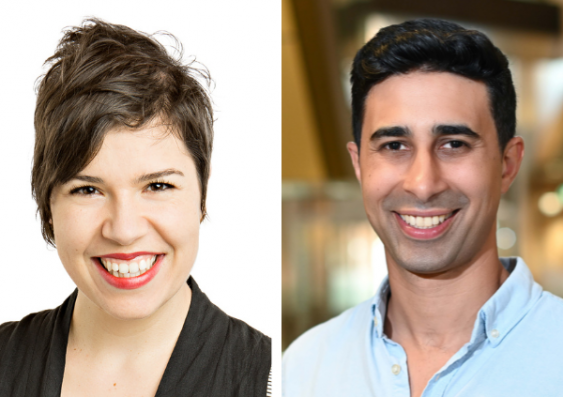
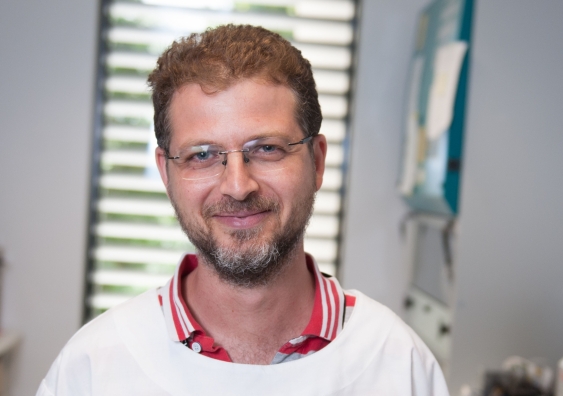
Dr Felix Rizzuto, Dr Deborah Burnett and Dr Ben Montet have been announced as 2025 Young Tall Poppies.
Photo: UNSW Sydney

Dr Deborah Burnett, Dr Felix Rizzuto and Dr Ben Montet are acknowledged as future leaders in science and technology.
Three UNSW Sydney researchers have received 2025 NSW Young Tall Poppy Science Awards in recognition of their research and public advocacy in immunology, nanotechnology and astronomy.
Run by the Australian Institute of Policy and Science (AIPS), the Young Tall Poppy Science Awards honour up-and-coming scientists who combine world-class research with a passionate commitment to communicating science. They celebrate researchers across all areas of science and are held on a state-by-state basis, with 10 recipients from NSW in 2025.
UNSW Deputy Vice-Chancellor Research & Enterprise, Professor Bronwyn Fox, congratulated the University’s Young Tall Poppies.
“From understanding the immune system to advancing nanotechnology and exploring distant worlds, Dr Burnett, Dr Rizzuto and Dr Montet are not only shaping the future of science but also inspiring the wider community,” Prof. Fox said.
“I’m delighted to see their achievements recognised through the Young Tall Poppy Awards, which celebrate world-class research and the vital role scientists play in mentoring future generations.”
Dr Deborah Burnett
Dr Burnett, from UNSW Medicine & Health, has been recognised for her work exploring a fundamental paradox of the immune system: how it can produce a wide range of antibodies to fight evolving infection threats while preventing the immune system from attacking the body’s own tissues.
Her work has pioneered our understanding of how B cells (the immune cells that produce antibodies) tackle challenging immune threats, particularly infectious diseases associated with autoimmunity.
Dr Burnett’s work has helped create ways to develop vaccines for these serious health threats. It has also deepened our understanding of what causes autoimmune diseases, which could lead to improved diagnoses and treatment.
“Since establishing my lab at UNSW last year, I’ve been blown away by the collaborative and supportive environment and the new avenues this has opened to facilitate direct translation of our research discoveries into real-world health outcomes,” Dr Burnett said.
“Being named a NSW Tall Poppy is a wonderful honour and I’m so thrilled to have my team and our collaborative network’s efforts recognised this way.”
From understanding the immune system to advancing nanotechnology and exploring distant worlds, Dr Burnett, Dr Rizzuto and Dr Montet are not only shaping the future of science but also inspiring the wider community.





Dr Ben Montet
Dr Montet from UNSW Science has been recognised for his research into the architecture of planetary systems and the search for potentially habitable worlds. His work explores how different planetary configurations, including those with highly tilted orbits or multiple stars, influence the stability and habitability of worlds beyond our own.
By identifying which systems are most likely to support life, Dr Montet is helping to guide astronomical observations and missions in the quest to find life elsewhere in the galaxy.
Dr Montet studies data from space telescopes such as Kepler and TESS to uncover the secrets of planets and stars. His research investigates how stars spin, age and flare, and how those behaviours influence surrounding planets.
He has discovered dozens of planets, including K2-18b, a potentially habitable world that shows signs of molecules on Earth typically linked to life. He has also studied Tabby’s Star, famous for its baffling and irregular dimming.
“I’m incredibly honoured to be named a NSW Young Tall Poppy. This recognition reflects the hard work and creativity of the students and early-career researchers I’m lucky to work with at UNSW,” Dr Montet said.
“Their enthusiasm for exploring new ideas makes working on these projects exciting every day, and I’m proud to be part of a team that’s helping push the boundaries of what we know about our place in the Universe.”
Dr Felix Rizzuto
Dr Rizzuto from UNSW Science has been recognised for his research into controlling how tiny machines move and work.
He and his team use the basic building blocks of life – DNA, RNA, peptides, lipids and small molecules – to create miniature technologies for use in soft robotics, synthetic biology and health care.
Dr Rizzuto’s work uses DNA in a different way from biology – as a flexible material to build nanoscale, shape-shifting structures. These nanomachines can be powered by light and programmed to deliver drugs, detect substances, or trigger chemical reactions on demand.
“It’s a real honour to be named a NSW Young Tall Poppy. I’m lucky to work with an amazing team of talented students, mentors and collaborators who inspire me every day. It’s humbling to see our work being so embraced by the Australian community,” Dr Rizzuto said.
Media enquiries
For enquiries about this story and interview requests please contact Yolande Hutchinson:
Tel: 0420 845 023
Email: y.hutchinson@unsw.edu.au