


Value-adding Australia's critical mineral resources
Solutions for sustainability, resilience and prosperity

The global shift toward digitalisation, electrification and decarbonisation is driving demand for critical minerals and derived products. Australia, endowed with world-class resources, can become a global leader in sustainable production, with estimates of AUD 60 billion in annual economic uplift.
In 2023, Australia exported AUD 214.5 billion of metallic ores and concentrates. Less than 10% of this value, however, was captured domestically, with a declining finished metals sector contributing only AUD 18 billion.
The Commonwealth has recognised the critical economic importance of modernising the value chain from mine to foundry and is prioritising innovation under the Future Made in Australia (FMA) plan, the Critical Minerals Strategy, ARENA, and other programs.
Increasing Australia’s share of the end value of its mineral exports will not be easy. It requires advances in technology and integrated public/private investment strategies for critical infrastructure and new industrial plant in regional hubs.
Access to competitively priced electricity is vital
The primary barrier to investment in modern plant and processes is the cost and scarcity of electricity in mining and metal production regions.Orders of magnitude more electricity at secure, globally competitive pricing will be required to transition to modern mineral processing, foundry and manufacturing technologies.
Building a resilient heavy industrial sector
The industry development challenge has four interdependent pillars:
Developing technologies and processes that are cost-competitive and compliant with Australian environmental and net-zero regulation
Strategic allocation of capital to modern plant and critical infrastructure
Prioritising provision of cheap and abundant electricity to Net Zero Industrial Precincts (new multi-gigawatt supply for mineral processing, AI data centres, chemical manufacture, and food processing)
Skills — building the workforce needed to support a globally competitive manufacturing system
The challenge demands convergence across many disciplines, including mining, metallurgy, computing, automation and next-generation energy technologies. UNSW has world-class expertise, laboratories and test-bed facilities that can be deployed.

Whyalla Steelworks has struggled for decades and will be receiving an AUD 1.9 billion government subsidy to support investment in new clean technologies. The works directly employs 1,100 workers and is critical to sovereign Australian steel. As one of only two Australian steelworks, it produces 75% of Australian-made structural steel and is the only domestic producer of long steel products. In general, Australia’s metals sector suffers from ageing plant and insecure access to the bulk electricity needed to power modern smelting, foundry and finishing technologies.
Contents


-
Size of the Prize
In 2023, Australia exported AUD 214.5 billion of metallic ores and concentrates, dominated by iron ore (AUD 133 billion), gold (AUD 25 billion), bauxite and alumina (AUD 15 billion), lithium (AUD 18 billion), copper (AUD 12 billion), nickel (AUD 5 billion), zinc/lead (AUD 4 billion), and rare earths (AUD 2.5 billion). Only a small proportion of mine output goes to domestic metals manufacture, with the finished metals sector contributing only AUD 18 billion. This imbalance underscores both an economic and strategic opportunity for Australia.
From a technical standpoint, converting raw ores into higher-value products such as aluminium, copper cathode, lithium hydroxide, nickel sulphate, and rare earth oxides delivers substantial margin uplift relative to unprocessed exports. Our econometric modelling demonstrates that these uplifts can be forecast and stress-tested using dynamic panel error-correction models and factor-based demand forecasting, which link metals demand to macroeconomic drivers such as EV adoption, renewable deployment, and industrial output. Financial econometrics further refines this analysis through stochastic NPV/IRR simulations and real options modelling, capturing volatility in energy costs, carbon prices, FX, and financing conditions. These tools provide not just central estimates but full distributions of risk-adjusted outcomes, which are essential for capital-intensive projects with long payback periods.
From a policy perspective, expanding domestic processing not only increases export revenues and GDP but also lowers sovereign exposure to offshore high-emission jurisdictions and strengthens Australia’s standing as a reliable supplier of certified low-carbon critical minerals. This dual outcome of greater value capture, underpinned by rigorous financial and econometric validation, combined with enhanced strategic credibility in global clean energy and technology supply chains, ensures alignment between economic gains, climate transition imperatives, and national security priorities.
Business insight
Our integrated econometric–financial modelling framework for the metals value chain links global demand, processing technologies, energy systems, and macroeconomic outcomes. The framework consists of five components.
First, commodity demand forecasting is undertaken using dynamic panel error-correction and factor-augmented models that capture both long-run equilibrium relationships and short-run adjustments between metals demand, electric vehicle adoption, renewable deployment, and industrial production (Engle & Granger, 1987; Johansen, 1991; Stock & Watson, 2016).
Second, process yields and cost parameters are calibrated against peer-reviewed benchmarks and industry data (IAI, IEA, Wu et al., 2019), ensuring engineering realism.
Third, energy and carbon pricing trajectories are integrated from AEMO’s Integrated System Plan, ARENA’s Ultra-Low-Cost Solar program, and EU CBAM regulations, with stochastic processes applied to capture volatility and policy shocks.
Fourth, financial evaluation applies stochastic NPV and IRR analysis alongside real options techniques, enabling assessment of the full distribution of returns under uncertainty in energy, carbon, and foreign exchange markets (Bingler & Colesanti Senni, 2020).
Finally, macroeconomic spillovers are quantified using the latest ABS Input–Output multipliers, translating sectoral investments into GDP contributions and employment impacts.
By integrating scenario-consistent econometric forecasting with stochastic financial evaluation and engineering-based process parameters, the econometric team, led by Dr Rachida Ousyse, produces risk-adjusted estimates of the “size of the prize” that are both technically robust and directly relevant for policy and investment decision-making in Australia’s metals sector.
Australia's Metals Value Uplift Pathway

Figure 1: Value Uplift Pathway: illustrates the incremental increase in sector value from AUD 214B ores and AUD 18B current finished metals, to AUD 265–285B under moderate/high processing scenarios by 2035.
Table 1 summarises one-way sensitivity tests around the central estimate of AUD 60 B annual uplift (2035, 20% diversion). The results show that outcomes are most sensitive to the processing share of ores diverted to domestic refining, followed by electricity prices and refined–ore price spreads. Financial assumptions (WACC, FX) also materially influence the range. This approach mirrors standard practice in project finance (real options analysis; stochastic NPV modelling) and ensures robustness of the business case under uncertainty.2
Driver
Change
Low (AUD B)
High (AUD B)
Processing share
10% to 30%
30.0
90.0
Refined Ore price spread
-15% to +15%
51.0
69.0
Electricity price
+20 to -20 AUD/MWh
52.0
68.0
Carbon price
75 to 150 USD/tCO₂
59.5
64.0
AUD/USD FX
+10% TO -10%
54.0
66.0
Discount rate
+2pp to -2pp
53.0
67.0
Table 1: Sensitivity analysis of the 2035 uplift estimate, showing ranges under alternative assumptions.
Critical minerals and rare earths
Growth in the critical mineral and rare earth sector is being driven by digitization, electrification and advances in technology that depend in highly specialized, high-value-density materials. Critical minerals can be found mixed in with complex ore bodies (eg BHP’s Olympic Dam) or at low densities in mineral sands.
The national critical mineral strategy projects that building downstream refining/processing and a larger share of the value chain could generate ~A$139.7 b in GDP and ~262,600 jobs over 2022–2040 (CSIRO, 2024).
Despite weak prices now, lithium exports are forecast to rise in real terms from ~A$5.2 b in FY2025 to ~A$8.2 b by FY2030, driven by volumes (Export Finance Australia, 2025).
Global demand pull: The critical-minerals market doubled over the past five years and demand for key inputs is set to 2–4× by 2030 under energy-transition scenarios (Austrade, 2024; IEA, 2024). Australia is prioritised in the Critical Minerals Strategy 2023–2030 to capture this (DISR, 2023; Austrade, 2025).
Policy drivers: Parliament passed processing tax incentives (10% of eligible refining/processing costs for 31 minerals, from 2028–2040) and hydrogen credits—measures intended to anchor more on-shore value-add (Reuters, 2025).
In practice this means:
- Near term (2024–26): Lower prices keep current export values subdued relative to 2022–23 peaks; lithium remains the main earner among criticals (OCE, 2024; IEA, 2024).
- Medium term (to 2030): Volume growth plus policy-led midstream build-out (processing/tax incentives, project finance facilities) underpins higher, more diversified earnings—especially if Australia captures processing margins (DISR, 2023; Austrade, 2024; Reuters, 2025).
- Longer term (to 2040): Achieving strategy goals could unlock ~A$140 b in cumulative GDP from value-added activities across the chain—well above raw export receipts alone (CSIRO, 2024).
The distribution of Australian critical minerals and mines is shown in Figure 2. NSW has substantial rare earth resources.
Figure 2: Australia critical mineral resources and mines (Geoscience Australia 2024)

Finished metals
Australia’s current domestic smelting and foundry sector is declining, with a market value of AUD 18 billion in 2023. Facilities include Alcoa of Australia (AUD 5.2 billion), Rio Tinto (AUD 2.6 billion), South32 (AUD 1.8 billion), BHP Olympic Dam (AUD 3.9 billion), Nyrstar Port Pirie (AUD 1.1 billion), Iluka Narngulu (AUD 1.2 billion), and Glencore (AUD 2.5 billion). Approximately 900 million tonnes (Mt) of iron ore are exported annually, with less than 2% transformed domestically into steel or advanced alloys.
Government subsidies have propped up the domestic metals sector, but the root causes of decline have not been addressed—primarily the cost of energy, but also ageing, inefficient plant, labour productivity, and competition from imported metal goods. Under the net-zero industry safeguard mechanism, facilities are covered by mandated targets, making the economics yet more difficult.
The upshot is that there has not been a clear business case to invest in next-generation plant with higher levels of automation, carbon efficiency, and ESG compliance. Current production volumes and approximate market values for major operators are shown in Table 2.
Table 2: Australia metal production by major facility, 2023
Company
Metal
Annual Production (2023)
Est Value (AUD)
Alcoa of Australia
Alumina/Aluminum
9.7 Mt alumina, 0.3 Mt aluminum
$5.2 billion
Rio Tinto (Bell Bay, Tomago)
Aluminum
0.5 Mt
$2.6 billion
South32 (Cannington)
Zinc/Lead/Silver
0.2 Mt Zn, 0.1 Mt Pb, 10 Moz Ag
$1.8 billion
BHP (Olympic Dam)
Copper/Uranium/Gold
0.2 Mt Cu, 3.3 kt U3O8
$3.9 billion
Nyrstar (Port Pirie)
Lead/Zinc/Silver
160 kt Pb, 100 kt Zn
$1.1 billion
Iluka (Narngulu)
Zircon/Rare Earths
60 kt REE conc.
$1.2 billion
Glencore (Mount Isa, Townsville)
Copper/Lead/Zinc
0.2 Mt Cu, 0.1 Mt Pb/Zn
$2.5 billion
Financial simulations indicate clear expansion pathways. Replacing 25% of alumina exports with low-carbon aluminium smelting could add AUD 12B to 15B per year by 2035. Processing 50% of spodumene into lithium hydroxide and nickel sulphide into nickel sulphate could add approximately AUD 10B to 12B per year, and scaling rare earth refining fivefold could capture AUD 5B to 7B per year. Together these would expand the sector to an estimated AUD 50B to 60B by 2035.
Barriers remain substantial: energy intensity (13–15 MWh/t Al), multi-billion-dollar CAPEX with long paybacks, and exposure to Chinese overcapacity. ESG risk premia continue to elevate WACC for Australian projects. Nonetheless, enabling policies can shift feasibility. CBAM penalises raw exports, tilting economics toward clean domestic processing. Future Made in Australia incentives, ARENA and CEFC support, and contracts-for-difference could bridge cost gaps. Sovereign-backed blended finance could reduce WACC by 30–60 basis points, mobilising superannuation capital.
The business case for expanding Australia’s finished metals sector rests not only on the incremental revenues generated, but also on systemic risk reduction and broad multiplier effects across the economy. Input–Output analysis from the ABS indicates that every AUD 1 billion invested in refining generates between AUD 1.3 and 1.5 billion in GDP and supports 3,000 to 5,000 jobs. With the right enabling ecosystem, Australia can move decisively from being a raw ore exporter to becoming a global hub for clean metals, securing both economic and strategic dividends by 2035.
Ecosystem Enablers Map: Pathway to Value Uplift

Figure 3: Ecosystem Enablers Map: Energy (renewable PPAs, AEMO ISP build-out, ARENA ULCS), Finance (CEFC/NAIF blending, sovereign guarantees), Policy (CBAM alignment, CfDs, ISSB/SASB disclosure), Workforce (STEM skills, CRC-style hubs), and International (critical minerals partnerships, certified low-carbon metals) are the ecosystem domains that collectively enable realisation of the AUD 50–70B prize.

-
The primary metal value chain (excluding manufacture of goods from metal) includes a series of interlinked stages, involving many specialized disciplines and technologies:
- Mining: Excavation, drilling, blasting, and hauling of ores from open-pit or underground mines.
- Beneficiation: Involves crushing, grinding, flotation, and other separations to concentrate valuable minerals.
- Smelting and Refining: High-temperature (pyrometallurgy) or aqueous-based (hydrometallurgy) processes produce crude and refined metal
- Foundry and Casting: Melting and shaping into ingots, bars, or intermediate products.
- Metal Manufacturing: Final product formation by rolling, alloying, heat treating, and finishing processes.
- Recovery: extraction of minerals from mine tailings and by recycling metals from waste streams is an important emerging field
Production systems and specific techniques depend on many factors including on the type of mineral, the ore body, the degree to which companies are vertically integrated, enabling infrastructure, work force, and the regulatory regime for environmental impact.
Unverisities have a critical role in delivering Australia's goals in the critical minerals domain. Establishing a 'joined up', resilient and globally competive value chain from mine to finished products demands research, translation and training, tailored to the specific needs of industry.
UNSW is leading major national and international projects in collaboration with peak research and education bodies and is pioneering transdisciplinary, Industry 4.0 approaches.
UNSW's flagship program links interdisciplinary capability and portfolios of industry research projects across many disciplines, including:
- Mineral and Energy Resource Engineering
- Primary and secondary metalurgy
- Energy innovation – industrial scale solutions for renewable generation, storage, efficiency
- Industrial process optimization and advanced manufacturing
- Sensing, machine learning, AI and robotics
- Traceability and provenance
- Integrated carbon accounting
- Nature positive solutions
- Circularity
- Economics and business intelligence

-
Precision mining: The UNSW school of Mineral and Energy Resource Engineering (MERE), is ranking 2nd globally and is a leader in next generation mining methods. MERE leads the peak national research program for future mining methods (Next Gen Min ITRP Hub) and is developing precision technologies for mining and beneficiation.
Energy innovation: Given that the affordability of clean electricity is the primary limiting factor for CAPEX in new domestic mineral processing plant, UNSW Electrical Engineering and SPREE provide work clase expertise across renewable generation, storage and distribution.
Advanced Metalurgy: The Chem Eng School and Materials Science Schools have extensive relevant capability across metallurgical processing, including computational process modelling and advanced sensing. Notably, the Shen Lab leads national programs in green iron and steel, and mineral recovery from waste streams.
Digital solutions: The Computer Science and Engineering School (CSE) brings expertise across sensing, machine learning, robotic and AI.
Finance and risk: Australia can potentially attract billions in JV capital for advanced processing plant and regional industrial hubs. The Business and Engineering faculties are combining expertise to support the business case for both public and private investment.
Research leaders
UNSW research leaders in the field include:


Prof. Ismet Canbulat
Head of School, Mineral and Energy Resources Engineering. Next generation mining technologies, rock mechanics, mine design, ground support system optimisation, numerical modelling, ground control, and risk-based geotechnical assessment.
Profile
Prof. Cordelia Selomulya
Head of School, Chemical Engineering. Next generation chemistry to underpin clean industrial processes and clean energy technologies
Profile
Prof. Serkan Saydam
Director of the ARC Research Hub for Next Generation Mining Methods (NextGenMIN), driving innovation in sustainable mining methods and technologies.
Profile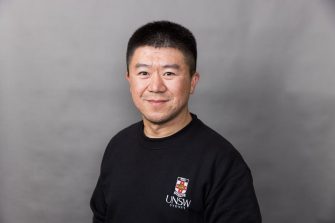
Prof. Yansong Shen
DRI modelling, shaft furnace CFD, metal sector techno economics. Mineral recovery from waste streams.
Profile
Prof. Cyrille Boyer
Green chemistry solutions for mineral processing, including alternative polymers for use in ESG compliant hydrometalurgy.
Profile
Prof. Seher Ata
Multiphase metalic ore and rare earth separation systems and flotation plant practice.
Profile
Prof. Michael Ferry
Head of School, School of Materials Science & Engineering. Mechanisms of microstructure and texture evolution during solidification, solid-state phase transformation and deformation & annealing with particular emphasis on agile metal manufacturing processes.
Profile
Prof. Sophie Primig
Processing-structure-property relationships of structural alloys for high performance applications, with key interests in aerospace and sustainable manufacturing routes. Materials include Ni-based superalloys, advanced steels, Ti-alloys, Al-alloys, and refractory metals processed by thermo-mechanical routes or 3D printing.
Profile
Prof. Jianqiang Zhang
Complex gas-solid reactions at high temperatures in application to steel/alloy high temperature corrosion and metallurgical technologies.
Profile
Dr Vitor Vieira Rielli
Development and optimisation of materials for industrial applications in extreme environments
Profile
Prof. Veena Sahajwalla
Recycling and circular economy solutions. High temperature transformation of waste materials as part of metal production processes.
Profile


Prof. John Fletcher
Power electronics, microgrids, energy storage and control. Integrated solutions for firm gigawatt scale supply of industrial electricity.
Profile
Dr Rachida Ouysse
Econometric & financial modelling for the mining and metals sectors. Economic and climate policy integration.
Profile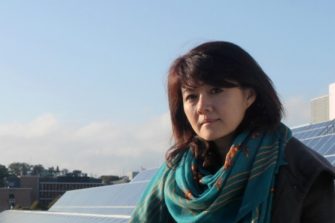
Prof. Rose Amal
Photocatalytic green hydrogen production for use in heavy industrial applications including metal manufacturing. Next generation, low emission industrial process engineering
Profile
Prof. Sami Kara
Life cycle and energy optimisation in advanced manufacturing. Industry 4.0 methodologies and analytics solutions.
Profile
Prof. Greg Leslie
Director of the Global Water Institute. Sustainable industrial water supply and security solutions, advanced membrane technology, bulk recycling and water quality science
Profile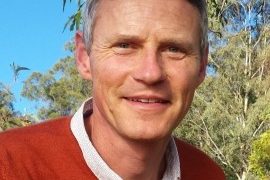
Prof. Tommy Wiedmann
Integrated carbon accounting for industrial systems and value chains. Life cycle analysis and industrial systems modelling
Profile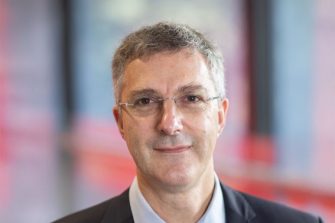
Prof. Christoph Arns
Geological storage and Carbon Sequestration Science. Multiphysics flows (incl. multiphase and reacting flows), statistical mechanics, physical combinatorics and mathematical aspects of condensed matter, surface properties of condensed matter
Profile
Prof. Fethi Rabhi
AI supported multifactorial modeling and scenario tools for heavy industrial value chains and infrastructure
Profile
Prof. Andrey V. Savkin
Control theory for energy systems and networks. Advanced monitoring and analytics solutions
Profile
Prof. Vijay Sivaraman
Networking, SDN and IoT security for data infrastructure in industrial applications.
Profile

Dr Ghislain Bournival
Quality control in metallurgical processing. Use of colloidal particles in froth flotation
Profile
Dr Chaoran Huang
Data mining, machine learning and IoT data analytics in mining and mineral processing systems.
ProfilePartnerships















Laboratories and test bed facilities
UNSW has world class labs, test bed and prototyping facilities available for research in the domain. These include:
Precision mining
- NMR Low-Field Laboratory – relaxometry/diffusion for fluids in porous media (multiphase flow, wettability, reservoir performance).
- Tyree X-Ray (micro-CT) – high-resolution 3D imaging of porous media, ores and composites for process design and QA.
- ViMINE (virtual mine planning) & Immersive Technology Lab (VR/AR) – integrated digital mine simulation, training and planning environments.
Mineral Processing
- Mineral Processing – flotation, size reduction, magnetic separation & dewatering; includes Denver and custom flotation cells, mills, furnaces and specialised bubble/foam rigs for three-phase (gas–liquid–solid) phenomena.
- Advanced Geochemistry Laboratory – electrochemical extraction & recovery of precious/critical metals from low-grade ores and wastes (hydrometallurgy focus).
Metallurgy, Smelting & High-Temperature Processing
- Shen Lab / SCoPE (Computational Process Engineering) — specialised furnaces, off-gas analysis rigs, reduction/oxidation reactors and particle-scale diagnostic tools modelling & simulation of reactive multiphase flows in metallurgical reactors; green ironmaking (DRI) and metal recovery testbeds.
- Pyrometallurgy Group (School of Materials Science & Engineering) – research on smelting/thermal routes for iron & steel, aluminium, metallurgical silicon and non-ferrous metals; efficiency and emissions reduction in carbothermal processes.
- High-Temperature Materials Group – oxidation/corrosion behaviour and materials performance in mineral & metallurgical processing conditions.
- Frontier Alloys & Processes Group – alloy design and advanced processing (incl. casting/thermomechanical routes; links to additive manufacturing of metallic systems).
Recycling Test-beds (Industrial Pilots & Micro-factories)
- Shen Lab – Recycling & Green Processing – high-temperature recycling, critical-metal recovery, fine-particle processing and circular-economy pathways relevant to steelmaking, photovoltaics and industrial waste streams. Particle-scale diagnostic tools for investigating phase transformations, volatile species capture and impurity removal. Applications include PV module recycling, silicon recovery, slag valorisation, waste-to-metal conversion, biomass/solid-waste utilisation, and process modelling for circular ironmaking.
- SMaRT Centre – MICROfactorie® platforms – modular, high-temperature micro-recycling lines that transform e-waste, glass, plastics and textiles into metal alloys and engineered “green ceramics”
UNSW Energy Test Beds and Labs (powering future industry)
UNSW Real-Time Power System Simulation & HIL Lab
- Real-time digital simulation, DER orchestration platforms, hardware-in-the-loop inverter testing and hybrid AC/DC grid emulation. Opal-RT and dSPACE environments enabling closed-loop testing of inverters, microgrid controllers, and protection schemes.
UNSW Microgrid, Remote Area & Island Grid Test Platform
- Testbeds for remote microgrids and SAPS including inverter cycling, PV emulation, load control and battery management.
High-Power Power Electronics Test Facility
- Converter prototyping, switching characterisation, thermal cycling rigs and grid-interface converter validation.
Hydrogen & Electrolysers Laboratory (Chemical Engineering)
- Multiphase electrolysers, catalyst rigs, membrane testing stands and ammonia synthesis equipment used in OzAmmonia research.
Renewable Fuels Laboratory (UNSW)
- Catalyst screening, plasma/photocatalytic hydrogen rigs and pilot reactors for green hydrogen and renewable fuels.
Vanadium Redox Flow Battery Laboratory (UNSW)
- Flow-cell modules, stack cycling benches, electrolyte development systems and thermal management platforms.
Battery Engineering Test Suites
- Cyclers, environmental chambers, impedance spectroscopy and cell/module prototyping for multiple chemistries.
Energy Storage Systems Integration Lab
- Battery inverter setups, PV simulators and controllable loads for grid-forming and grid-supportive storage validation.
Mechanical & Manufacturing Engineering Test Facilities
- Advanced manufacturing labs including CNC machining, water/air-jet cutting, laser-hybrid systems and tribometry up to 1000 °C.
Photovoltaics & Renewable Energy Engineering (SPREE) Laboratories
- World-leading solar R&D infrastructure including IV-characterisation benches, spectral response, accelerated ageing, laser doping, furnace processing, and tandem/perovskite integration suites.
ARENA-funded Daylight PL Inspection Test Facility
- Photoluminescence-based, drone-compatible PV module inspection testbed enabling daytime diagnostics for utility-scale solar farms.
Perovskite & Tandem PV Pilot Spaces
- Thin-film deposition, glovebox suites, encapsulation tools and degradation test rigs for tandem and perovskite solar R&D.
Materials & Manufacturing Futures
- Shared fabrication and metrology facilities including SEM/EBSD, XRD, micro-CT and pilot-scale materials processing.
Powder Metallurgy & High-Temperature Processing Lab
- Sintering furnaces, controlled-atmosphere systems and alloy development facilities.
SCoPE Lab – Ironmaking & Pyrometallurgy Facilities
- High-temperature reactors, reduction furnaces, gas-injection rigs and diagnostics for DRI and hydrogen metallisation.
Minerals & Energy Resources Engineering Pilot Plants
- Flotation rigs, separation benches, geometallurgical characterisation and pilot-scale mineral processing lines.
Digital & Manufacturing Adjacent (useful for prototyping/tooling)
- Mechanical & Manufacturing Engineering test facilities – advanced manufacturing labs (machining, water/air-jet, laser-hybrid, additive manufacturing), mechanics-of-solids test frames (incl. high-temperature tribometry to 1000 °C).
- Materials & Manufacturing Futures Institute (MMFI) – shared research/manufacturing facilities and metrology for materials innovation and scale-up.
-
UNSW research and translation activity in the field spans direct contract work for major companies (typiclaly under NDA), national collaborative programs, grant funded precommercial research under ARC, ARENA and other programs, and research that is embedded in professional training (eg via PhD programs). A sample of collaborative projects is referenced below.
Exploration, Mining & Beneficiation
ARC Research Hub for Next Generation Mining Methods (NextGenMIN)
Developing autonomous, low-impact, digital mining technologies to support sustainable extraction of critical minerals.
Midstream: Processing, Metallurgy, Iron/Steel
Blast Furnace Innovations: RISB – Shen Lab
ARENA-funded project integrating hydrogen-rich injectants and sustainable burdens into blast furnaces for low-carbon ironmaking.
SuSteelAG – Green Iron/Steel (Australia–Germany)
Bilateral feasibility study on green iron exports and hydrogen-based steel value chains.
Frontier Alloys & Processes Group
R&D on next-generation alloys, including high-entropy and additively manufactured metals.
Advanced Materials & Manufacturing
Automation and robotics for advanced composite manufacturing.
Professorial Chair and portfolio focussed on grain boundary engineering and metallurgical innovation.
Circular Economy & Recycling
TRaCE Trailblazer – Recycling & Clean Energy
National flagship program on commercialising circular economy and clean energy solutions.
Industrial energy solutions
Renewable Energy & Decarbonisation – $6.3m ARENA Portfolio (incl. Hydrogen & Steel)
ARENA-backed projects at UNSW including renewable hydrogen, ammonia and low-carbon ironmaking R&D.
ARC Linkage – Natural Hydrogen Generation (Waite Group)
Geochemical research into iron-mediated natural hydrogen production in the subsurface.
Daytime Inspection Solutions for Advanced Operation and Maintenance of Solar Farms (ARENA R&D)
UNSW-led ARENA project developing daytime photoluminescence-based inspection and monitoring for utility-scale solar farms.

-
- Austrade (2024) Australian Critical Minerals Prospectus. Canberra: Australian Trade and Investment Commission. Available at: Austrade (pdf), January 2024.
- Austrade (2025) Critical minerals. Available here (accessed September 2025).
- CSIRO (2024) ‘From ground to growth: Australia’s strategic stake in the world’s critical minerals’, CSIRO News (March). Summarises strategy scenario of A$139.7 b GDP and 262,600 jobs (2022–2040). Available here
- Department of Industry, Science and Resources (DISR) (2023) Critical Minerals Strategy 2023–2030. Canberra: Australian Government. Available at: industry.gov.au.
- Geoscience Australia (2024) Australia’s Identified Mineral Resources 2024 (AIMR 2024). Canberra: Australian Government. Available here
- International Energy Agency (IEA) (2024) Global Critical Minerals Outlook 2024. Paris: IEA. Available here
- International Energy Agency (IEA) (2024) ‘Market review – Global Critical Minerals Outlook 2024’, IEA web briefing. Notes 2023 price falls across battery minerals. Available here
- International Energy Agency (IEA) (2025) Global Critical Minerals Outlook 2025 – Executive summary. Paris: IEA. Available here
- Office of the Chief Economist (OCE) (2024) Resources and Energy Quarterly: September 2024. Canberra: DISR. Lithium earnings A$9.9 b (FY2023–24), outlook to 2025–26. Available here
- Office of the Chief Economist (OCE) (2025) Resources and Energy Quarterly: March 2025. Canberra: DISR. (Report landing page). Available here
- Argus Media (2025) ‘Australian rare earth oxide output to rise in 2025: OCE’, Argus Metals (1 April). Summarises OCE view on REO output and price headwinds for cobalt/manganese.
- Export Finance Australia (EFA) (2025) ‘Australia—Higher lithium exports supported by strong mine output’, World Risk Developments (May). Forecasts lithium exports ~A$5.2 b (FY2025) → ~A$8.2 b (FY2030) and notes concentration risks. Available here
- Reuters (2025) ‘Australia passes tax incentives law for critical minerals’, 11 February. Details 10% processing/refining incentive (2028–2040).
- Engle, R. F., & Granger, C. W. J. (1987). Co-integration and error correction: Representation, estimation, and testing. Econometrica, 55(2), 251–276.
- Johansen, S. (1991). Estimation and hypothesis testing of cointegration vectors in Gaussian vector autoregressive models. Econometrica, 59(6), 1551–1580.
- Stock, J. H., & Watson, M. W. (2016). Dynamic factor models, factor-augmented vector autoregressions, and structural vector autoregressions in macroeconomics. In Handbook of Macroeconomics, Vol. 2.
- Dixit, A. K., & Pindyck, R. S. (1994). Investment under Uncertainty. Princeton University Press.
- Battiston, S., Mandel, A., Monasterolo, I., Schütze, F., & Visentin, G. (2017). A climate stress-test of the financial system. Nature Climate Change, 7, 283–288.
- Bingler, J. A., & Colesanti Senni, C. (2020). Taming the Green Swan: How to improve climate-related financial risk assessments. Economics Working Paper Series, ETH Zurich.
- Berg, F., Kölbel, J., & Rigobon, R. (2022). Aggregate Confusion: The Divergence of ESG Ratings. Review of Finance, 26(6), 1315–1344.
- ABS (Australian Bureau of Statistics). (2023). Input–Output Tables, 2022–23.
- AEMO (Australian Energy Market Operator). (2024). Integrated System Plan.
- ARENA (Australian Renewable Energy Agency). Ultra-Low-Cost Solar Roadmap.
- European Commission. (2021–2026). Carbon Border Adjustment Mechanism (CBAM) regulation.
- IEA (International Energy Agency). (2023). Global Critical Minerals Outlook; World Energy Outlook.
- International Aluminium Institute (IAI). (2023). Aluminium sector energy statistics.


