
Our alumni community
Our UNSW Law & Justice alumni community now includes more than 24,500 graduates worldwide. An extraordinary network of leaders, changemakers, and innovators, making meaningful contributions in their chosen field. Here, we proudly share their stories, highlighting the impact and career journeys of some of our inspiring alumni.

Sabreen Hussain
Sabreen Hussain
LLB/BA 2023, PLT 2024
A graduate lawyer with a focus on Commercial Law, Sabreen is a passionate advocate for marginalised and disadvantaged communities, who never forgets the human experience behind the application of law.
Tell us about yourself and what motivated you to specialise in this area of law.
After graduating, I commenced my career at Allens where I am currently completing my second graduate rotation in Technology, Media, and Telecommunications, following a rotation in Commercial Litigation. During my time at UNSW, I was actively involved in the law school’s negotiation and mediation competitions. These experiences sparked my passion for solving complex commercial problems and using creativity and business insight to deliver pragmatic, commercially sound legal solutions. Combined with my broader interest in international business, this motivated me to pursue a career in commercial law, where I can work with diverse clients and industries navigating evolving commercial challenges.
Why is studying law important?
Studying law is important because it cultivates critical thinking and sharp analytical skills, enabling individuals to assess complex situations and construct logical, well-reasoned arguments from multiple perspectives.
It deepens one’s understanding of how society and the law continuously influence each other, particularly how legal systems both reflect and shape social values, norms, and behaviours. The discipline also equips you with a versatile skill set, including persuasive communication, negotiation, and problem-solving abilities that are valuable across all professional fields. Studying law fosters social awareness and responsibility, empowering individuals to engage with issues of justice and fairness, subsequently driving positive societal change.
How did your time at UNSW help shape who you are today, and did you see yourself where you are now in your first year?
The opportunities and high standard of education at UNSW were instrumental in shaping the lawyer I am today. The university’s interactive, discussion-based tutorials created an engaging environment where I could debate and explore different perspectives. Additionally, UNSW’s lecturers were not only experts in their fields but also deeply invested in their students’ success. They consistently provided thoughtful feedback and took the time to clarify challenging concepts, which created a supportive learning environment. Further, being surrounded by motivated and talented peers pushed me to strive for excellence and embrace new challenges, which allowed me to grow personally and professionally.
What is one of the biggest challenges you face in your field of work?
One of the biggest challenges I have faced in commercial law is the lack of diversity, particularly at senior levels. While my firm has taken meaningful steps to foster inclusion, such as providing halal food, prayer spaces, and hosting culturally inclusive events, these initiatives often address surface-level diversity rather than the deeper structural inequities that persist.
Celebrating differences is an important step, but true inclusivity requires systemic change, including equitable pathways for career progression, mentorship opportunities, and recognition of diverse perspectives in decision-making.
Navigating these challenges has strengthened my resilience and commitment to contributing to a more inclusive professional culture.
How does working with community groups impact the way you practice law, and what is your biggest takeaway from volunteering?
Working with community groups, particularly through the Islamophobia Register Australia and the Allens Pro Bono Clinic, has profoundly shaped my approach to legal practice. These experiences have shown me that legal issues are never abstract they impact real people facing discrimination, housing insecurity, and financial hardship. My biggest takeaway from volunteering is the value of perspective and empathy in legal practice. Engaging with diverse communities has highlighted the law is most effective when it is inclusive, practical, and grounded in an understanding of people’s lived experiences. Application of the law requires compassion, patience, and a genuine commitment to justice.
What advice would you give current law students approaching the end of their degree, as they look ahead at their early careers?
I would advise students to engage with lawyers across different practice areas to understand the realities of day-to-day legal work. The profession is diverse, and firsthand insights can clarify what truly excites them. I would also encourage students to make the most of every opportunity available, such as mentorship, volunteer work, or participating in mooting, negotiation, or client-interviewing competitions. These experiences not only develop practical skills but also help build confidence, networks, and perspective.
Most importantly, I would remind them there is no “right” path in law. Every experience contributes to career development, and they should stay open-minded and flexible.

Robert L Coombs
Robert L Coombs
BCom 1975, PLT 2024, JD 2025
Becoming a UNSW Alumnus for the first time in 1975 with a Bachelor of Commerce (Financial Accounting), Bob Coombs graduated again in 2025 with a Juris Doctor at the age of 78.
A certified public accountant and mediator, Bob has followed a path of education, eclectic interests and an array of leadership roles and geographic locations. He was admitted as a Fellow of the Australian Institute of Company Directors in 1990, gained a Master of Arts with Merit in Ancient Greek and Roman History from the University of Sydney in 2007, completed a Graduate Diploma in Legal Professional Practice in 2024, and most recently his Juris Doctor at UNSW in 2025. That same year, he was admitted as a Practising Solicitor with the Law Society of NSW.
Bob is a qualified Mediator and has had a successful career in leadership roles across finance, IT and communications sectors, sales and marketing and now is a practicing solicitor.
After such a long and successful career, what inspired you to change course and study law?
I was privileged to matriculate at Sydney Boys High School in 1965 and intended to enrol in Law but did not have enough marks to earn a place, so I finally completed a BCom at UNSW. I always considered going back to law when the timing was available. When COVID arrived, I was semi-retired and, rather than slipping into retirement and golf, the opportunity to do the Doctor of Jurisprudence at UNSW was compelling.
What surprised you the most on your journey from student to solicitor?
The journey to JD and finally being admitted as a Solicitor was long and all consuming. As a mature student I was very comfortable with many of the legal situations having navigated them in my previous commercial life. The surprise was the rich depth of Law in the JD, which matched up to my breadth of experience in commerce, and the vast opportunities available on graduation.
As Legal Director of the new Working Women’s Centre at the Women’s Legal Service NSW, Sharmilla Bargon is living her values and dedication to people-focused law.I was very privileged to know many in the legal profession, Judges, Barristers and Solicitors. The mentorship of those was essential in my graduation. Specifically, two Judges and my eventual master solicitors and lecturers and fellow students, guided me and helped me to understand how much more I had to learn.
The standout moments were with Justice Weinstein when we had to debate an important principle in the law, the principle of "instinctive or intuitive" when applied by sentencing judges.
The overarching principle was that the law is not and should not be static. Good precedent should survive but there is always room to reflect and question and, if necessary, change.
What advice would you give to current students about seeking and maintaining mentor relationships?
My strong advice is to look for and value as many mentorships as you feel you can handle. All mentors will have limitations. No one mentor will have all the answers. It is important when choosing and retaining mentors that you are confident that they will point you in the right direction and have the depth of experience you are looking for.
How did your education at UNSW prepare you for your career?
The UNSW JD course is comprehensive and of the highest quality.
The opportunities and practical court work sessions were outstanding. The opportunity to practise with real live law at the Kingsford Legal Centre was inspiring.
Were there any particular courses or professors at UNSW that had a lasting impact on you?
Sentencing and Criminal Justice was my most favoured subject. The generosity given by Supreme Court Justices Dina Yehia and Richard Weinstein made the subject real and memorable. Also, Law in the Global Context and Environmental Law were a great preparation for law beyond Australia.
What do you think is the most important thing a person can do to build a successful career?
The most important thing is to graduate. Employers look for someone who has proven that they can learn at a high level.
Throughout my career it has been necessary and enjoyable to keep learning, academically and from colleagues and situations.
The constants have been ultimate ethical behaviour, tolerance in all respects, and to always seek the facts, never guess.
My family quite often ask what I do. I have had the privilege to coach and mentor many senior executives of the world's largest companies. My answer is that I coach people to be nice to one another.
What advice do you have for students just starting out, or established professionals trying to reach their next milestone?
When into your career, the most important thing is to enjoy your chosen path and to work with people that you trust and respect (liking will follow). Life is too short to waste in something that you are not passionate about.

Daniel Mendoza-Jones
Daniel Mendoza-Jones
BCom / LLB 2006, LLM 2013
Principal at Mendoza Legal, Legal Officer in the Royal Australian Air Force Specialist Reserve and now cofounder of Wait Mate, a not-for-profit movement aimed at delaying smartphone use among primary school children, Daniel Mendoza-Jones is committed to viewing the practice of law as a service.
What inspired you to pursue a career in law, and how did you find your niche within the field?
I remember being fascinated by the history and development of our legal system and how the rule of law underpins democracy and Western civilisation. I loved reading cases for their interesting language and how they provided a portal to human and societal issues over such a long time. I developed particular interests in business law and international law. I started as a graduate at Allens and founded my own practice in 2015 where I continue to focus on those aspects (as especially applied to technology, Defence industry, aerospace and security) and the international aspects in my role as a legal officer in the Air Force Reserve.
How important do you think it is for young lawyers to find a specific area of law they are passionate about?
It’s really important to first develop a deep interest in civics, law, legal systems and their role in society in general, rather than trying to jump straight to a narrow area of interest.
It’s only by being immersed in the history, role and potential of our legal system that a particular area of legal interest can naturally emerge and then be pursued within that broader context.
I think this is what distinguishes being a lawyer as a professional practitioner from others who use their legal training for other purposes. It’s so fulfilling and rewarding that today I can use my corporate, commercial and international areas of professional specialisation in fascinating, complex technology-related transactions and important matters relating to national security.
Can you share an experience where a mentor significantly impacted your professional journey?
A mentor once advised me that, in order to succeed in any field of endeavour, I should identify a select number of objectives and pursue those with excellence.
‘Don’t try to be all things to all people’ has been a guiding principle of my career, influencing me to develop strong areas of legal specialisation and a successful legal practice. I was also strongly advised to see professional practice as being a service, which has influenced my style as a practitioner and my approach to volunteering my time and skills to assist not-for-profit boards and other organisations working in the public interest.
What advice would you give to current students about seeking and maintaining mentor relationships?
It's essential. For some people, mentoring relationships develop organically as a result of existing interactions. A great benefit of spending time on campus and getting involved in clubs and activities is the chance to form mentoring relationships with other students who are a few steps ahead as well. This seems to happen less often now, probably because so much interaction has moved online. Mentoring schemes are therefore really important, especially if they match mentors and mentees based on areas of interest, personality and values.
I have benefited enormously from advice, feedback and guidance from professional mentors throughout my career that would otherwise be really difficult to obtain.
How did your education at UNSW prepare you for your career in law?
The undergraduate and postgraduate education experiences were very good, and with the benefit of hindsight, compare favourably with the classroom experience in further masters studies I subsequently completed in the United States. I particularly appreciated the small class sizes, as well as the combination of dedicated academics with other expert practitioners as part of the teaching mix. Looking back, involvement and taking leadership roles in organisations such as the Law Society, Law Revue and Law Journal were foundational experiences in advocacy, negotiation, organisation and dealing with challenging situations. All of which are directly relevant to my legal practice today.
What motivated you to create Wait Mate, and what did you hope to achieve?
My co-founders and I are all parents of young kids. We started Wait Mate because of our increasing worry about the effects of smartphone use on children and adolescents.
We advocate for responsible and age-appropriate use of smartphones, empowering parents to delay giving their children smartphones.
We also work to raise awareness about the mental health, social, and developmental risks associated with early and unrestricted smartphone access; we support parents with resources; community engagement; policy advocacy; and we promote digital wellbeing and safer online environments for young people. The best way to understand the Wait Mate philosophy is to read Jonathan Haidt’s book The Anxious Generation, our efforts are very aligned with his recommendations.
How does Wait Mate support parents and families navigating the complex landscape of children growing up in the digital age?
The Wait Mate pledge is a voluntary commitment made by parents and caregivers to ‘hit pause on smartphones’.
Once ten parents sign the pledge in the same year at the same school, the pledge ‘unlocks’ and those parents are connected to be able to stand strong together. By delaying smartphone ownership for children, we are reducing exposure to harmful content, addictive apps, and social media pressures. There are alternative communication tools, such as basic phones, that provide for safety and contact without full internet access. We’re delighted with the progress so far. Since we launched in mid-2024, we have had enormous media coverage and nearly 14,000 pledges have been made and more than 1.800 school communities are involved (as at November 2025). At a minimum, we want all primary schools to become smartphone free.
We want our kids to have a play-based childhood with important real-world experiences to help them develop essential human social skills and resilience.

Sharmilla Bargon
Sharmilla Bargon
LLB 2009
As Legal Director of the new Working Women’s Centre at the Women’s Legal Service NSW, Sharmilla Bargon is living her values and dedication to people-focused law.
Sharmilla also taught Discrimination and the Law at UNSW Law & Justice in 2024 and has recently been welcomed as a new member of the UNSW Law Advisory Council.
What inspired you to pursue a career in law, and how did you find your niche within the field?
I have always wanted to make a difference to people’s lives, and my first job out of uni was as a scientist conducting cancer research. It was meaningful work, with the potential to lead to life saving advances but I realised that what drives me is forming connections with the people I am helping and contributing to change on a personal level. I’m energised by working with people, driven by social justice and engaging in big ideas and discussion.
When I moved into law and found myself in a Foundations of Law class where my fellow students loudly and hotly argued about the need for a bill of rights, I knew I was in the right place and I’d made the right decision.
How important do you think it is for young lawyers to find a specific area of law they are passionate about?
My work is incredibly meaningful to me. I’m drawn to employment and discrimination law because it is fundamentally people-focused, with my clients’ stories sitting at the heart of every claim. I also value the technical complexity of the area, which still allows space for creativity and for the development of novel legal arguments, which is critical working in community law. I believe it is essential for young lawyers to explore different practice areas so they can land in a space that aligns with their strengths and genuinely motivates them. We spend too long at work not to enjoy it.
Can you share an experience where a mentor significantly impacted your professional journey?
I was fortunate to undertake an Aurora native title placement in the Torres Straight while still at law school. I was doing a summer clerkship at Gilbert +Tobin, and was concerned it might take me away from my longer-term goal of working toward social justice. The principal lawyer of the land titles office said “Go to the firm. Learn everything you can. Just remember who you are and to come back to us. They can train you in a way we can’t.” Gilbert + Tobin provided me with a decade of rewarding opportunities working with talented lawyers and the work helped me to develop strong legal skills and a strategic mind set.
My principal lawyer was right however and when I started at Redfern Legal Centre, it felt like I’d come home.
What advice would you give to current students about seeking and maintaining mentor relationships?
It is important to surround yourself with people who share your values and who push you to grow. Seek out mentors who not only open doors, but who also embody the kind of lawyer you want to be. During law school, it’s easy to get caught up in the maelstrom of summer clerkships applications. Remember why you chose to study law and don’t lose sight of your own definition of success. There are many paths to a fulfilling legal career, and mentors can help you find yours.
How did your education at UNSW prepare you for your career?
The tutorial-based method of learning at UNSW Law was invaluable in preparing me for my career. Some of the most rewarding parts of my work involve engaging in robust debate and my UNSW classes gave me practice in adopting a confident position but also listening to others so that we all arrived at a more nuanced and considered view (at best – this doesn’t always happen of course).
What motivated you to volunteer your time to be a member of the Law Advisory Council, and what do you hope to achieve?
I chose UNSW law because of its social justice reputation. I volunteer my time on the Law Advisory Council because I want to support the Law School to continue producing graduates that are principled, reform minded and community focused.
I hope to provide support the next generation of UNSW trained lawyers to think beyond traditional career paths and the big law firms and use the law as a powerful tool for change.
How do you think the Advisory Council can work together to steer the Faculty of Law & Justice into the future?
The Advisory Council brings together voices from private practice, the community legal sector, government and academia. Together we can provide insights from our day-to-day work to keep teaching, research and other programs responsive to real world challenges, especially for marginalised communities. I’d love to play a role in supporting opportunities for students to gain hands-on-experience through legal clinics, pro bono projects and partnerships to help graduates develop practical skills and get them community law job-ready.

Ben Koval
Ben Koval
Juris Doctor 2021
With a career built on discovery of the law and of himself, Ben Koval’s story is one of finding value in places you wouldn’t expect and being true to who you are.
What inspired you to pursue a career in law, and how did you find your niche within the field?
I always wanted to pursue a career in law, but I also had a passion for history and politics. I attended the Australian National University where I completed an arts degree (with honours) majoring in Art History and Curatorship. Throughout my years at the ABC, I was constantly intrigued by media laws, defamation, and how law impacts people's lives, which led me to complete my Juris Doctor at UNSW.
I found my niche in privacy and technology law through trial and error, once I started, I was hooked. After working in a corporate firm on disputes resolution teams for banks and insurance companies, I realised those areas of law were not a long-term fit for me.
How important do you think it is for young lawyers to find a specific area of law they are passionate about?
Passion, much like a Lady Gaga song, draws you back in every day.
I had a passion for media law, and I still read defamation judgements in my spare time. However, by trying other areas of law I was able to pursue other interests and passions to build a successful career. Trial-and-error with areas of law that I didn’t think I would like enabled me to learn which aspects of a practice area I did or didn’t enjoy, which gave me the necessary skills to keep my dreams alive and move into privacy and technology law.
Can you share an experience where a mentor significantly impacted your professional journey?
My uncle, John Anthony, was a significant mentor to me. He was a Navy man and studied law in his late 20s, early 30s. He, too, felt that the profession was for him, but for various reasons had started his career differently.
I was afraid of changing my career in my late 20s, but through his stories and lived experience, I knew it would all be ok. He would tell stories at family gatherings, and I was drawn to the procedural aspects of the matters he was running. I also saw that he was rewarded for being driven and determined to help the community through his practice. While we practice very different areas of law, I apply his ethics and attitude to my own practice.
What advice would you give to current students about seeking and maintaining mentor relationships?
Mentors should be people you resonate and connect with easily. They can be formal and informal. To be a great mentee, you need to be open to learning how to develop the professional skills to best grow your career and practice, and you need to want something more than just a job interview.
I had a mentor once who was really only there for a line on their CV. They were assigned to me in my undergrad and, as a keen student, I sent a few emails requesting coffee catch ups, preparing questions about the industry and how to best start my career. A quick one-paragraph reply told me everything I needed to know. “I don’t meet up in person, just email me your questions and I can answer them. I don’t proofread essays.” It is etched in my brain.
However, at the time I was volunteering at the National Library pictures collection and the Head Curator was supervising my work.
I was lamenting about this experience, and as she was providing me with guidance on how to tackle the next steps, it clicked that the real mentor I needed was right in front me.
We had clicked and she heard my concerns, answered my questions, and it was just easy. She has been someone who I have gone back to with issues throughout my career.
Her advice wasn’t law related, it was interpersonal, administrative, and how to manage relationships which are invaluable skills to run a practice. This experience demonstrated to me that the role of mentorship needs to be more than a check-box exercise.
How did your education at UNSW prepare you for your career in law?
Completing the UNSW Juris Doctor was incredible preparation for my career in law.
It helped me build a network of like-minded legal professionals who I draw on when required and provided me with the necessary knowledge needed for my career in technology, privacy and media law. We were taught in a dynamic and hybrid environment, meaning that we were in small groups for classes and I was able to learn and discuss legal principles in a very nurturing environment.
Food Law constantly comes to mind as the best law course I completed at UNSW. It sounds weird, but as a subject matter elective it was so engaging and demonstrated how as a legal professional you need to know a lot about different areas of law to have successful practice. To me, the best aspect of this course was its interactive nature, and it was very, very interesting. I constantly draw on what we were taught, and it always makes for a great anecdote in a dinner party discussion about the appellation system of wines in France.
What motivated you to join Pride in Law, and what benefits have you gained from being a member?
Pride in Law represented an opportunity to contribute to the LGBTQIA+ community and legal profession. When I joined Pride in Law it was just starting. I was excited to help build an association that could transform the community within the legal community in NSW. It was so satisfying to meet other legal professionals from the community who have a similar lived experience, many of whom have become friends and contacts in my network.
How does Pride in Law support LGBTQIA+ lawyers in navigating their careers and what initiatives or programs from the organisation have you found most valuable?
Events that Pride in Law host really assist LGBTQIA+ lawyers in their careers, particularly panel events that discuss ways of working in hetero dominated workplaces. We always try to have a networking or social aspect to our events so attendees can not only build their networks but make new connections with like-minded legal professionals.
One event that stuck with me was a panel event, hosted by UNSW Law & Justice, with some senior community leaders, Gillian Mahony SC, Nicole Evans and Chris Pearce, attended by students and law professionals.
Chatting with attendees after the panel, many mentioned they had never considered the power that being true to yourself could have on your career and how that could lead to success.
We also had many attendees meet others who have become return attendees and contribute to our discussions.

Regie-Anne Gardoce
Regie-Anne Gardoce
BCom/LLB, GDLPP 2020
From legal tech to mental health and philanthropy, Regie Anne’s journey is one of innovation and striving to create community that gives back.
With her foundation in the discipline of Law, Regie Anne has helped support founders, creatives, and startups as they build and grow - challenging norms, solving real problems, and making an impact. It has empowered her to ask better questions, rethink what’s possible, and contribute meaningfully to the world around her
Please tell us about yourself and your work.
After graduating, I wore many hats at Sprintlaw across marketing, sales, legal and operations, eventually leading its Legal Transformation practice. I now lead operations at Kantoko, a healthcare startup focused on improving access to ADHD care. Mental health still carries a stigma in many communities, and people often don’t know where to turn for help. When they do, it’s often too expensive or too hard. Bridging these awareness and accessibility gaps is what drives me.
Having used my skills beyond just the legal industry, I’ve learnt that studying law taught me how the world works (and how to change it!).
I’ve also started volunteering at Five Bucks, a giving community that democratises philanthropy, and where small amounts collectively create big change. Members contribute $5 a week, and the final amount is donated to a charity selected by a vote.
How did your time at UNSW help shape who you are today?
UNSW taught me to constantly question the world around me. With an innovation hub right across the road (where pitch nights and hackathons were always happening), I was drawn to innovation early on, which made joining a legal tech startup feel natural. I also took social impact courses and interned at the Social Impact Hub, where I was first introduced to social enterprises. That experience planted the seed for my involvement in the Five Bucks story, inspiring people to chip in and create a meaningful, collective impact. It’s all shaped how I think, build, and lead today. My legal background has given me the tools to help others navigate complex systems with clarity and confidence, especially in a world where bold, creative ideas need structure to thrive.
UNSW always taught me to challenge the status quo - while I’ve moved beyond strictly legal work, my foundation in law continues to shape how I think, lead, and create meaningful, long-term impact across different industries.
If you told 1st-year me that I’d build a legal tech career, then work in mental health and philanthropy, it would’ve sounded like an absolute dream! Like many others, I didn’t know what opportunities were around me and assumed I’d end up in a traditional legal path. But over time, I discovered how the legal world could intersect with innovation and social impact. That’s what led me to work at startups and impact organisations, and eventually transition into roles where I could influence positive change in sectors like mental health and philanthropy. It’s been a rewarding, unexpected journey.
What advice would you give current law students approaching the end of their degree, as they look ahead at their early careers?
I’ve said the same thing to all law students before: stay curious! My curiosity has led me in many unexpected directions, shaping my career in ways I never imagined. Also, find the right people who will champion you.
The most meaningful change happens when you find your people, so don’t be afraid to put yourself out there and make meaningful connections with people whose values resonate with you.
More often than not, they’ll not only support you but lead the way to opportunities that align with your passions.

Ko Ko Aung
Ko Ko Aung
LLB/BE (Hons) 2018
Ko Ko Aung’s journey is one of resilience, purpose, and unwavering commitment to justice.
As a migrant from Myanmar, Ko Ko was acutely aware of the systemic barriers faced by those navigating complex immigration systems, particularly refugees and stateless individuals. This awareness, combined with the ongoing political crisis in Myanmar, inspired him to specialise in immigration and refugee law.
Ko Ko has won the Lawyers Weekly 30 Under 30 three times: for Migration Law in 2025 and 2023; and for Pro Bono/Community Lawyer in 2025. He was the Refugee Council of Australia and STARTTS 2024 NSW Humanitarian Award (Government and Legal) recipient. Ko Ko was also the Law Council of Australia's 2023 John Gibson AM Young Australian Migration Lawyer of the Year.
Please tell us about yourself and your work.
I am a Special Counsel at an immigration law firm where I advise on complex visa matters, humanitarian and protection claims, deportation, and citizenship issues. The 2021 military coup in Myanmar reinforced my resolve to support forcibly displaced communities and I continue to assist Burmese refugees and provide legal advice to the Australian branch of the National Unity Government of Myanmar.
As the Company Secretary for Afghan Women on the Move, I support a grassroots organisation focused on the rights, leadership, and resettlement of Afghan women and their families. I’ve contributed to creating skilled migration pathways with Talent Beyond Boundaries, helping to shift the global narrative to view refugees as potential, rather than a burden, and supported the Refugee Student Settlement Pathway, an initiative dedicated to enabling young people from refugee backgrounds to access higher education opportunities in Australia.
At the heart of my career is the belief that the law must serve people with fairness, dignity, and compassion. In legal practice or community engagement, I strive to challenge exclusionary systems and contribute to a more just and inclusive Australia.
Outside of work, I’m a passionate follower of the Premier League and a regular at the Barry’s Bootcamp classes at Martin Place. They keep me grounded, focused, and energised.
How did your time at UNSW help shape who you are today?
UNSW not only gave me the academic foundation I needed to pursue a legal career, but it was where I made real connections and found my community.
I was actively involved with the UNSW Law Society, the UNSW Myanmar Student Society, and the UNSW Buddhist Society. Volunteering with these groups gave me a strong sense of belonging and purpose. I met people from all walks of life, many of whom are still close friends and colleagues today. They taught me the value of collaboration, community, and staying connected to my roots while building something new.
Formative internships at Baker & McKenzie, the HIV/AIDS Legal Centre, and the Andrew & Renata Kaldor Centre for International Refugee Law, laid the foundation of my legal career, and grounded my practice in a rights-based, policy-aware approach.
After graduating from UNSW with degrees in Civil Engineering and Law, I embarked on a legal career deeply shaped by my personal journey and a strong commitment to social justice. In 2019, I was admitted as a Solicitor.
Looking back, UNSW was where everything started to come together. It gave me the skills, support, and confidence to step into the work I do now.
Reflecting on your first year at university, did you imagine yourself doing what you do today?
Not at all. When I started at UNSW, I had never done any legal studies. In Myanmar the education system was based almost entirely on rote learning and legal studies were not offered. When I arrived in Australia I was stepping into a completely different world, trying to understand not just a new subject, but a whole new way of thinking. Without any seniors from a Myanmar background in the field of law, it was tough navigating that space without a clear roadmap. I remember feeling overwhelmed, unsure if I could ever catch up—let alone thrive.
But over time, things started to shift. I found meaning in the cases I was reading, purpose in the stories of the people I was learning to advocate for, and excitement in the complexity of the law. It became less about just keeping up and more about falling in love with what I was doing. Looking back now, I realise it was all about finding my passion and letting that passion carry me forward.
What advice would you give to students about starting their legal careers?
Don’t worry if your path doesn’t look like everyone else’s. Stay open. Stay curious. Stay connected to what genuinely matters to you. I didn’t have a clear path or anyone from a similar background in law to look to for guidance. There were moments when I felt lost or unsure if I was doing the right thing. But over time, I learned that there isn’t just one “right” way to build a legal career.
If an area of law speaks to you don’t be afraid to pursue it. For me, that was immigration and refugee law. I care deeply about the people I work with and the impact I can have. I’ve found myself slowly falling in love with the work and, especially on the harder days, that makes a big difference.
Lean into your communities. University friends, cultural groups, or volunteering/work colleagues. Some of the best advice and encouragement I’ve received came from informal chats, not official mentoring programs.
Be okay with starting small. Pro bono work, internships and admin tasks all build your experience and teach you valuable lessons. Approach opportunities with humility and willingness to learn. You don’t need to have it all figured out right away.

Yvonne Lam
Yvonne Lam
BCom LLB 2011
Yvonne Lam is a partner at Gilchrist Connell, specialising in advising on corporate and regulatory matters for the insurance industry, and has recently stepped into a new role as NSW Branch President with Asian Australian Lawyers Association (AALA).
On finding your place in the law
What inspired you to pursue a career in law, and how did you find your niche within the field?
Following my graduation from UNSW, I started in a graduate program at AMP in their financial services division as I hold a Bachelor of Commerce (Finance) as well as my law degree. At that time, I was initially more drawn to a career in business rather than in law but later realised that I actually wanted to pursue a career that allowed me to combine my finance background with legal expertise.
Fortunately, around the time that I came to that realisation, a role opened up for a graduate lawyer opportunity in an international insurance law firm which was launching in Australia. After following that path for over a decade, I am currently a partner in Australian insurance law firm Gilchrist Connell, specialising in advising on corporate and regulatory matters for the insurance industry. In this career, I have been able to draw upon both my legal and financial skillsets and it has allowed me to carve out a niche in this space due to my commercial approach to advising clients on complex legal matters relating to mergers and acquisitions, corporate governance, compliance and regulatory investigations such as those related to the landmark Financial Services Royal Commission.
How important do you think it is for young lawyers to find a specific area of law they are passionate about?
It is rare as a young lawyer that you find the specific area of law that is your passion. It may take some trial and error (like in my case) before you find your ideal space in the industry based on your strengths and interests. My advice to young lawyers would be to keep an open mind, try a few different areas of law first (such as through graduate program rotations) before you make an informed decision on where you would like to specialise in your career in the law.
On mentorship
Can you share an experience where a mentor significantly impacted your professional journey?
Through the Asian Australian Lawyers Association’s National Mentoring Program, I was matched with a senior lawyer (also of an Asian Australian background) in a similar area of practice as mine at a time when I had just been promoted into a senior lawyer role myself. There were many parallels in our career trajectories, and she shared a number of pearls of wisdom with me which really resonated and shaped my way forward in the industry. A few years later, I was pleased to see that she had been promoted to partner at another law firm, and she inspired me to pursue a similar promotion when the opportunity came up for me to lead and build a new practice in a different firm as a partner.
What advice would you give to current students about seeking and maintaining mentor relationships?
As a mentee who benefited from a mentor’s timely guidance in my own career (both through AALA and other mentoring arrangements), my advice to current students is to be brave enough to reach out to role models to seek these mentors and to proactively drive the mentoring relationship – come ready with questions for your mentor and you may be pleasantly surprised by the willingness of more senior members of the industry to share their guidance with you.
On their time at UNSW
How did your education at UNSW prepare you for your career in law?
My time at UNSW allowed me to develop logical reasoning skills in both my law and commerce degrees, which are critical to the role that I have chosen to pursue as a corporate insurance and regulatory lawyer, where I am often advising on factually and legally complex matters for a variety of clients.
UNSW also had excellent student societies which I was involved with, including both the Law Society where I was the Negotiations Competition Coordinator and the Business Society where I was the Vice President (External Operations) with oversight of the Careers, Sponsorship and Education portfolios. My extracurricular involvement with both of these student societies enabled me to build strong time management skills and gave me the opportunity to lead a team from early on, which has been a foundational skillset for me as I have moved into various leadership roles throughout in my career in law.
Were there any particular courses or teachers at UNSW that had a lasting impact on you?
Reflecting on the calibre of teachers at UNSW who were all passionate about their chosen areas of the law, the standout for me was The Hon. Keith Mason AC QC (former President of the Court of Appeal of NSW) who taught an equity and conceptual framework of the common law course. Having such a distinguished authority on this area of the law teaching the course left a lasting impression on me, as I enjoyed the subject more than I had expected and it ended up being one of my better subjects in my law degree.
Professor Michael Legg was also a memorable lecturer in the core civil litigation courses. While I chose not to pursue a litigation path in my legal career, I have often come across his academic papers on corporate misconduct, securities class actions and regulatory litigation in my area of legal practice which intersects with these topics and it brings back fond memories of his teachings at UNSW.
On being part of the Asian Australian Lawyers Association
What motivated you to join the Asian Australian Lawyers Association, and what benefits have you gained from being a member?
Initially, I joined AALA as a member to participate as a mentee in the National Mentoring Program as I was seeking guidance from a more senior lawyer who had been in my shoes from a cultural background perspective. I gained these insights and more, finding a community of likeminded individuals who are also navigating their pathways through the legal industry.
I continued my involvement with AALA afterwards as a mentor in following years and enjoyed connecting with the next generation of lawyers coming through the industry. In 2024, after being awarded the Susan Gin Scholarship for the William Ah Ket Leadership Program at the ANU’s Centre for Asian-Australian Leadership, I decided it was the right time in my career to take on a leadership role within AALA’s executive team and was appointed as NSW Branch Vice-President. I have stepped into the NSW Branch President role in 2025 and am enjoying the opportunity to lead a fantastic team of volunteers who are dedicated to running initiatives tailored for our AALA members.
How do you think the association supports Asian Australian lawyers in navigating their careers and what initiatives or programs from the association have you found most valuable?
As the national peak body representing Asian Australian lawyers and lawyers with an interest in Asia, AALA has had a track record of over 10 years of supporting AALA members with navigating their careers through a mix of professional development programs such as CPD/soft skills programs designed for our members, showcasing inspiring Asian Australian leaders in the legal industry through panel discussions and networking events at a local branch level to build community connections.
At a personal level, the National Mentoring Program which is run every year by AALA has been the most rewarding AALA initiative for my career (both as a mentee and mentor). More recently, I have found the National Cultural Diversity Summit that AALA has run in a virtual and hybrid format following the pandemic to be thought-provoking and insightful, featuring an impressive line up of prominent leaders from the Asian Australian legal community from across all Australian states and territories, as well as the opportunity to network with these leaders at the in-person events.

Armando Gardiman
Armando Gardiman
LLB 1980, LLD 2024
From modest beginnings to legal luminary
Armando's remarkable journey began in 1974 when he commenced his law degree, culminating in his graduation with an LLB in 1980. Today, he serves as the managing partner of Turner Freeman Lawyers, a prestigious firm with over 18 offices nationwide. However, this achievement is just a fraction of his compelling story.
Armando's roots trace back to a modest upbringing. His parents, Italian immigrants, raised their family on a small subsistence farm in the hills outside Nimbin, NSW. Defying the odds, Armando became the first in his family to finish school and the first student from Nimbin Central School to attend law school. As a university student, Armando distinguished himself with his dedication to justice and fairness.
Following university, Armando emerged as one of Australia's leading lawyers in toxic torts. He is particularly renowned for representing people who developed fatal lung cancer from asbestos exposure. He tirelessly advocated for hundreds of sufferers to ensure their families received financial compensation, often visiting them in the hospital at any hour. To many families affected by asbestos, Armando is a hero.
Armando's commitment to justice extended beyond individual cases. For years, without compensation, he argued for legislation to aid asbestos-related disease sufferers. His efforts bore fruit in 1998 when NSW enacted a law ensuring that a victim’s compensation survived their death for the benefit of their dependants. This legislation, now reflected across all Australian states and territories, is a testament to Armando's relentless work, benefiting asbestos victims nationwide.
Further demonstrating his dedication, Armando worked without remuneration to prompt the NSW government to launch the 2004 Jackson Special Commission of Inquiry into James Hardie's underfunded compensation foundation for asbestos victims. His contributions to this inquiry were substantial, and the Inquiry found evidence of deceptive conduct by James Hardie Industries and its senior executives.
Armando also played a pivotal role in establishing the Asbestos Diseases Research Foundation in 2006, a non-profit organisation supporting research into asbestos and other dust-related diseases. As Bernie Banton AM became the public face of the foundation's efforts, Armando was the driving force behind the scenes, securing funding and organising campaigns.
In 2009, the Foundation's efforts led to the Asbestos Diseases Research Institute at Concord Hospital. Armando's work was crucial in raising the funds needed to build and staff the institute, including securing a grant from the Rudd government.
Armando continues to work long hours, often without public acknowledgment or financial reward, striving to improve treatments for asbestos-related diseases. His exceptional legal expertise has been consistently recognised. His numerous High Court cases have significantly reshaped the national landscape of tortious liability for dust diseases.
Throughout his career, Armando has been driven by a commitment to giving a voice to the disadvantaged, representing them during their most stressful times with unwavering integrity.
In recognition of his outstanding contributions, Armando was awarded the Order of Australia (AM) in 2016. In 2024, he was awarded the Honorary Doctor of Laws (LLD) from UNSW. His journey from a humble background to a leading legal figure exemplifies his dedication, compassion, and remarkable impact on society.
This is an edited transcript of the Occasional Address by Dr Shane Simpson AM, who presented Armando Gardiman AM with the UNSW Honorary Doctor of Laws in May 2024.

Rameez Merchant
Rameez Merchant
BCCJ (Hons) 2023
Meet Rameez Merchant, a remarkable criminology graduate making waves in Canberra. As a recent ABC Heywire storytelling competition winner, Rameez had the chance to change lives for young people in regional Australia.
At the competition's summit, Rameez joined other winners from across the country to brainstorm how community organisations can use government grants to benefit teenagers and young adults. With a focus on sex education and consent, Rameez's team conceptualised a platform called Safe Sphere, where young people can ask questions and seek information in a safe environment. They presented their project to ministers and community leaders at Parliament House.
“It’s incredibly difficult to open up when it feels like nobody wants you to,” Rameez says. “There’s still so much stigma for young men, in particular, when talking about feelings. But when they are given the opportunity to open up, it’s freeing.”
The ABC Heywire competition provides a creative outlet for young people in regional areas to share and shape Australian culture through inspiring stories. Rameez’s story illustrates the daunting yet rewarding experience of speaking about important topics—such as losing his mother to cancer.
“Being open and talking about feelings and emotions requires a lot of honesty with yourself. It’s an incredibly challenging skill. But then all the fears of judgement and worry fade away. So much of the negativity that develops from bottling things up just dissipates.”
Rameez emphasises the importance of listening and creating environments where people can speak freely. “I’ve experienced being belittled for expressing the way I felt, which caused me to go back into my shell and bottle things up. I think many people, including a lot of young men, have had similar experiences.”
While studying social work at UNSW, Rameez discovered his passion for research and policy development in criminology. He graduated with a Bachelor of Criminology & Criminal Justice (Honours) in 2023.
His honours thesis, A Tick-Box Kind of Exercise, focused on the attitudes and experiences of young men toward sexual violence prevention at universities. “One standout moment during my research was when a participant from a focus group said it was the first time he had the opportunity to talk openly about sexual violence, gender, and power at university. That was a pretty special moment for me,” he recalls.
Reflecting on his journey, Rameez shares, “Criminology involves a personal and professional commitment to changing the lives of those in need. You might create environments where people feel safe to express themselves, improve the criminal justice system, or help individuals rehabilitate and reintegrate into society. Criminology graduates go out into the world to make meaningful change. If this resonates with you, then criminology could be a great fit.”
Recently, Rameez joined the Commonwealth Government Graduate Program. As a graduate employee with the Department of Education, he aims to build a career producing positive outcomes for young people in a variety of areas with the department.
Alumni Spotlights by Graduation Year
-

Asiya Chebbo
Asiya Chebbo
Juris Doctor, 2022
Asiya Chebbo is a Senior Judicial Registrar Associate and Legal Case Manager at the Federal Circuit and Family Court of Australia.
Tell us about your life and career(s) after UNSW.
My life post-UNSW can be broken up into two phases, with two very different careers.I started my career as a Media/Communications and Journalism graduate with a dream role at Woman’s Day Magazine, which at the time was part of the ACP Magazines stable and still part of the Packer empire.
However, a few short years into my career, the world of glossy magazines began to crumble as print media fell into decline. I was lucky enough that my degree allowed me to pivot roles and enter the world of public relations at Estée Lauder Companies. I thoroughly enjoyed my time at Estée Lauder Companies, looking after a brand portfolio of skincare and fragrances and tailoring global initiatives created by our New York headquarters to suit an Australian market.
My time at Estée Lauder came to an end as I welcomed my first child into the world, and I took a brief hiatus before I reassessed my career direction and enrolled in the Juris Doctor at UNSW, more than a decade after my first degree!
My Juris Doctor degree has taken me to all sorts of places within the legal landscape. During my studies, I worked on pro bono matters and Human Rights Commission Claims at Kingsford Legal Centre. I have since worked on high-profile criminal matters and am currently in the family law space.
I currently hold a role as Senior Judicial Registrar Associate and Legal Case Manager at the Federal Circuit and Family Court of Australia. Although I am now a world away from tabloid magazines and public relations, I believe I have come full circle and am grateful for all the skills I have acquired along the way.
Reflecting on your first year at uni - did you imagine yourself doing what you do today?
I can’t say that I imagined my life to be the way it turned out to be, but I am not surprised as I’ve always had an interest in many areas of study. In my first year at UNSW, I dabbled in a varied range of electives from International Relations to Art History and Theory.Whilst studying for my undergraduate degree, I knew that I wanted to enrol in the Juris Doctor and ensure that I maintained the required WAM; however, soon after graduation, ‘life’ happened, and it took me more than ten years to circle back to embark on the JD.
Why did you choose your initial undergrad degree? And why did you choose to come back for your JD?
I was always interested in a career in journalism or the law, and as an HSC student, UNSW was a university I always aspired to study at. Naturally, when I received an early offer from the Faculty of Arts & Social Sciences to study at UNSW, I jumped at the opportunity. Years later, I had no hesitation in going back to UNSW for my JD; in fact, if my children were to take the path of academic study, I’d hope they, too, choose the same alma mater!What were your most memorable experiences while studying at UNSW?
Going back to university as a postgraduate student with children was a very testing and challenging phase of my life. However, it’s also been one of the most rewarding things I’ve done. One of my most memorable experiences was undertaking a research thesis on succession law, and although my children will be able to attest to the many hours I spent away from them while reading and researching, I am very proud of the end result, and it was the best way to finish my degree.I am also grateful for the people I met along the way. Fellow alumna Jay Rajendran (soon-to-be California Bar admittee) was a pillar of support on my journey and someone I’d now consider a lifelong friend.
Why is studying law important?
You only need to look at the atrocities being committed in the world today to see why the law is so important. Legal knowledge enables individuals to challenge abuses of power, promote transparency, and demand accountability from governments and institutions. Ultimately, studying the law ensures that the values of peace, justice, and the protection of human life can be upheld.What are some common misconceptions about careers in law?
The stereotype of a career in law paints a picture of courtroom litigation. But in reality, a career in law is so vast and can reflect each individual’s strengths and passions.If could you change one thing in the legal profession tomorrow, what would it be?
I’d love to see more women reflected on the bench and at the bar. Specifically diverse women in positions of leadership. Although we have made leaps and strides in gender diversity, the statistics sadly speak for themselves, with women making up only 25% of the practising barristers in NSW[1]. I hope that my involvement with the Women Lawyers Association of NSW will continue to champion women in law and facilitate positive change in the workplace.What is one of the biggest challenges you face in your field of work?
Being a working mother is by far the greatest challenge I’ve faced. Juggling the demands of parenthood with a career is something I constantly need to manage and keep in check. Learning when to prioritise things and sacrifice others is an evolving skill that all working mothers constantly strive to perfect.What advice would you give someone considering studying a JD at UNSW?
Don’t think twice, just do it. You will truly get out what you put in.[1] Statistics | New South Wales Bar Association (nswbar.asn.au) Accessed 13 February, 2024

Jennifer Mar Young
Jennifer Mar Young
BA 1996 LLB 2003
Jennifer Mar Young is Director, Client Relationships with Arrilla Indigenous Services, a majority Indigenous owned and staffed management consulting firm (a joint venture with KPMG). Arrilla’s vision is to create a culturally competent Australia, one workplace at a time. This is achieved through the provision of face to face and online cultural competency training, and strategic advice and support.
At Arrilla, Jennifer is responsible for developing and maintaining strategic partnerships and relationships, promoting and extending the work of Arrilla to assist organisations to develop the skills, confidence and capabilities to work more effectively and successfully with Indigenous people and build greater understandings and successful outcomes.
Before Arrilla, Jennifer has worked inside and outside of Indigenous affairs for over 20 years, mostly in government social and legal policy and strategy roles. Jennifer is passionate about working with people and organisations to unpack and understand their role and opportunities to engage and build meaningful and respectful relationships and partnerships with Indigenous peoples and bring the richness of Indigenous cultures to more Australians.
Jennifer is also a mother of two primary aged children (three if you include the family dog!) and does some volunteer work with their local school and local Aboriginal preschool. Jennifer enjoys music (particularly piano), reading, movies, plus good food and wine.
I grew up in a large extended family in a tiny country town in NSW. Neither of my parents finished school, two of the most intelligent, hard-working people I’ve known. I was the first in my family to finish Year 12 and go onto university. I didn’t really know anyone in Sydney (a 5-6 hour drive from home). I didn’t know what a University was, had no concept of what it would be like, whether I would fit in – whether I could ‘cut it’. I didn’t do law when I first went to UNSW. I started my university career in a Commerce degree (which wasn’t a great fit!), then I switched to an Arts degree. After completing Arts and working for a while, I was encouraged by the Aboriginal education unit at the time to consider doing law. At first, that idea was mindboggling – ‘How could someone like me, ever make it through a law degree from UNSW!?’Receiving a law degree from UNSW was a proud moment for me and for my family. It also provided me with solid foundations for the professional years that lay ahead. The show of support I received from the law school as well as the Aboriginal education unit helped me to achieve academically in what was a very foreign environment. More importantly, it gave me the strength and confidence to confront those times when the dreaded ‘imposter syndrome’ would rear its ugly head. I feel privileged to have been surrounded by so many great people at the time, and in such good company as one of the first 100 Indigenous law graduates of UNSW. I am conscious that I stand on the shoulders of so many Indigenous people who have come before me and I try hard to do what I can to honour those people in the work that I do and the way that I live my life every day.
-

Danny Gilbert AM
Danny Gilbert AM
Hon LLD 2019
Danny Gilbert AM is a prominent Australian lawyer and business leader, best known as the Co-founder and Chairman of Gilbert + Tobin, one of Australia's foremost corporate law firms.
Danny and Tony Tobin shared a vision for a strong law firm that was a good corporate citizen and had pro bono work as part of its DNA. Together, they established Gilbert + Tobin in 1988 and set about making it the top-tier firm it is today.
“I look on the enterprise with gladness,” Danny said. “Not just for the work we did and do, not just for the people we might have helped along the way, but for all the people who had their start in the firm and who work at the firm now – the community of souls that a good, hard-working, creative organisation is.”
Over nearly four decades of leadership, Danny has been recognised with a slew of industry awards. Most recently, he was named Law Firm Leader of the Year in the Australasian Law Awards (2023 and 2020) and Managing Partner of the Year in the Lawyers Weekly Australian Law Awards (2018).
But perhaps Danny’s highest accolade is his appointment as a Member of the Order of Australia in 2005 for service to the law and to the community, particularly Indigenous Australians, in relation to social justice and welfare issues.
“For my generation the chance to make a difference came with the community legal centre movement in the 1970s. What does it say about a society that claims to be fair and just when poor people have little or no access to legal services? And that’s how it was."
Danny said meeting the Aboriginal people of Redfern in the 1980s opened his eyes to the impoverishment, destruction, displacement and abandonment inflicted on our First Peoples. By the time he was honoured with an Order of Australia, he was known for significant pro bono advocacy for Aboriginal community groups including the Yothu Yindi and Lingiari Foundations and the Kimberley Land Council.
When Danny was asked to help establish a centre of public law at UNSW, his response was ‘visceral and immediate’.
“That seemed to me an eminently important and good thing to support. And I immediately responded with a yes, that's something we would be proud to do, and we have been supporting it ever since,” he said.
In 2001, the Gilbert + Tobin Centre for Public Law was founded on the belief that Australians deserve access to credible information about how our system of government works, and that universities are responsible for sharing first-class research to the broader community.
The Centre's current research projects include Indigenous Legal Issues; Constitutional Democracy; and Free Speech, Social Media and Online Speech. Its expertise is broadly disseminated, through conferences and peer-reviewed journals to mainstream media and even primary school student workshops.
Danny sits on the Centre’s advisory committee, with his influential presence also apparent on boards of the Business Council of Australia, Cape York Partnership Group, Impact Investing Australia, Sydney Harbour Federation Trust, and the Reserve Bank of Australia.
Previously, Danny has also held various non-executive positions with Australians for Indigenous Constitutional Recognition, the National Australia Bank, the National Museum of Australia, Western Sydney University Foundation, the Australian Film Television and Radio School, the Law and Justice Foundation of NSW, and the Public Interest Advocacy Centre.
In recognition of his excellence, UNSW Law & Justice proudly conferred an honorary Doctor of Laws to Danny Gilbert AM in 2019.
Authored by Kate Newton, February 2025

Jack Rathie
Jack Rathie
LLB (Hons), BCom 2019
Tell us about your life and career after UNSW.
I’m the Co-Founder of DDLoop, an Aussie LegalTech company that helps lawyers automate parts of the legal due diligence process for M&A, financing and investment deals. DDLoop is backed by Startmate, Australia’s largest start-up accelerator and is working with some of Australia’s largest law firms to save lawyers from boring and tedious work.Before this, I worked at King & Wood Mallesons as an M&A lawyer. After a few years in practice, I moved to the legal innovation team, where I specialised in buying and building LegalTech to help lawyers eliminate boring and tedious aspects of corporate legal practice.
Reflecting on your first year at uni - did you imagine yourself doing what you do today?
No way! When I started studying at UNSW, I thought I’d go into marketing or advertising.I initially enrolled into a dual Bachelor of Commerce/Communications (PR & Advertising) and spent half a year as a part-time intern at an advertising agency. In second year, I transferred into law and had never heard of LegalTech.
How did your time at UNSW help shape who you are today?
During my time at UNSW I met great people – colleagues, professors and mentors. People who challenged my world-view; people who I could grow with; and people who helped rewire my thought patterns. Most of this came from the classroom approach to law classes and participating in negotiation and mediation competitions.What were your most memorable experiences while studying at UNSW?
Heading to Paris to compete in the International Chamber of Commerce’s Commercial Mediation Competition – we had such an intense training schedule that had us negotiating against real lawyers! I had the best time with the team (shout out to fellow alums Nadhirah Daud, Nanak Narulla and Brittany Young) and picked up skills that I still use every single day. All the training, advice and hard work paid off when we won the competition under the supreme guidance of our super-coach, Dr Rosemary Howell.
Sleeping through my alarm and showing up late to the Public Law exam in my first year of law school was also memorable... for the wrong reasons!Why is studying law important?
Studying law forced me develop arguments and points supported by principled reasoning. This has really helped in the startup world, where it’s important to weigh up and assess options before committing to a decision where there might be no exact precedent to follow – only analogous ideas or principles from other successful companies or industries.What are some common misconceptions about careers in law?
LegalTech, LegalOps and legal innovation are areas of huge growth in the industry and where having knowledge of the law and technology skills can be a huge X-factor. By technology skills, I don’t necessarily mean coding (though it’s a great skill), but there are so many lessons the profession can learn from the software industry in the areas of design and UX. I’m slightly biased, but anyone who can bridge the worlds between law and technology will have a very impactful career.If could you change one thing in the legal profession tomorrow, what would it be?
Experimentation. I think the profession could be more open to trying new things or to borrow ideas from other industries a bit more. Maybe don’t experiment too much when you need to minimise risk (put away that far-fetched, novel legal theory when giving advice!), but there are certainly areas (especially day-to-day operations) where the profession could be open to new ideas, workflows or tools.Just because the foundation of the legal profession is set up to respect and revere decades and decades of legal precedent, doesn’t mean we avoid pushing against it and testing the law. It’s actually the opposite! We should apply the same principle to how we practice law on the day-to-day. The push to understand and adopt AI has been a great example of this playing out – it’s awesome to see the industry roll up its sleeves and experiment.
What is one of the biggest challenges you face in your field of work?
As a lawyer, you’re trained to focus on and avoid risks. But as a founder, I’ve had to rewire those parts of my brain and accept there’s always going to be risk when doing something new. I’m grateful for the legal skillset as it gives me a principled approach to navigate uncertainty and ways of managing risk.What advice would you give someone considering studying a Bachelor of Laws at UNSW?
The classroom is only about 30% of the law experience. Like most things in life (at least I’ve found), law school and uni life are “pull systems” – you don’t get pushed towards the best bits, you have to pull them towards you by putting yourself out there.Do all the extracurricular competitions and double down on the ones you find fun. Get involved with the UNSW Law Society and other societies – especially the ones that help you travel the world!
What advice would you give current law students approaching the end of their degree, as they look ahead at their early careers?
Back yourself and your ability. Be open-minded and assertive at the same time and don’t be afraid to give your opinion and insights, even if you’re the most junior person in the room. You’ve got a fresh perspective and your employer (or investors) already think you belong in that room by bringing you there. Prove them right.

Venessa Ninovic
Venessa Ninovic
BCCJ 2018
Tell us a bit about your life and career after UNSW.
I am currently an intelligence practitioner with a government agency, with years of experience in the public and private sector in tactical, operational, and strategic intelligence. I am also a speaker and blogger in my spare time, sharing my knowledge and thoughts with the intelligence community. It is because of this; I was awarded the Australian Institute of Professional Intelligence Officers (AIPIO) ‘Emerging Intelligence Professional’ in 2022.I have always had an interest in crime, and it was within the first few years out of university I realised my interest for the intelligence sector. It first came to light when my sister Melanie was doing a capture the flag competition looking for real missing people online, doing open-source intelligence (OSINT). That’s where my interest in OSINT began, and I was amazed with the amount of information you can find online, and how it can be used for a good cause.
Reflecting on your first year at uni - did you imagine yourself doing what you do today?
I could have only dreamed of doing what I am doing now. I am at a place where I am very content with my career, noting that it took a lot of work to get to this point. As time goes on, you realise what you like, what you don’t like, and you have the option to narrow your focus on one specialised area. Your career is what you make it, if you find something that interests you, dive headfirst and learn all that you can, you never know where it can take you!After high school, I was a little lost with what I wanted to study at university. By the time I started my criminology degree, I had already done half a political science degree at a different university. However, in that degree I did one elective subject on criminology. That one elective was all it took to make the switch and I never looked back. I knew I enjoyed watching crime shows and learning about crime in general and having that encounter of criminology made me want to learn more. In my first year of the Bachelor of Criminology I was not aware of what the career options were for the degree, or what my goals were.
How did your time at UNSW help shape who you are today?
My time at UNSW helped me understand my love for research and writing in general. Learning both qualitative and quantitative research methods and report style writing within the Bachelor of Criminology has shaped my career as I still use those skills to this day.What were your most memorable experiences while studying at UNSW?
During my introduction to law subject, I was required to spend some time in a court room, to sit and observe the proceedings and take notes of what I witnessed. This later turned into an essay which I really enjoyed writing. Attending the courts was a fascinating experience, and one that actually really helped me in my career. As my first role out of university was a Court Officer for the Department of Justice, I was in charge of managing a court room at Downing Centre. Having the pre-existing knowledge of the court room, and the processes that took place, really assisted me when starting my new role.Why is the study of criminology and criminal justice important?
It's unfortunate, however, crime is a constant in our society. The world will always need criminologists and intelligence analysts. It is important to understand the reasonings behind someone’s behaviour, why they offend, why they reoffend, and the way the current justice system works. By knowing this, that then leads into preventative measures.Methods of crime are constantly evolving too, with the aid of evolving technologies like AI, which is something that fascinates me personally. It is an ever-evolving landscape, and although crime is a constant, the methods in which crimes are committed are constantly changing.
What are some common misconceptions about working in the field of criminology and criminal justice?
That you’ll either be a police officer, private investigator, or work in research. The reality is there is a wide range of roles that are relevant to the degree, which it’s great!What is one of the biggest challenges you face in your field of work?
Intelligence analysis is largely research based and data driven. Working with large amounts of data with the limited time you have been set to complete a report can be challenging. So, learning to manage your time is something I have had to learn over the years.Cognitive bias can have a large impact on intelligence analysis. Having initial beliefs can shape every stage of the intelligence cycle, and ultimately lead your analysis astray. This is why working in a team, seeking differing opinions and doing different analytical techniques is so essential in the work intelligence analysts do.
If could you change one thing in the law and justice system tomorrow, what would it be?
Bring in more education and assistance to help stop reoffending, to understand the background of the individual – and how that shapes them and their decisions. Nearly everyone has a background story, and it needs to be heard and understood before progressing forward.What advice would you give someone considering studying a Bachelor of Criminology and Criminal Justice at UNSW?
Universities offer a vast array of courses to choose from, and in the end, I am glad I chose a course that I thought would be interesting, and it definitely was. Criminology is a fascinating space to do a degree in, as there are so many facets of crime to learn about – psychology, history, law, society, you name it.Choosing a degree is a big decision, but if you have an interest in the reasonings for criminal activity, and the theories behind it, I say go for it. Reach out to others who have done the course (perhaps on LinkedIn) and ask them questions – what did they think of the course, would they recommend it, and look into the differing roles criminology alumni have – do these roles interest you? Deep dive further and look into those roles yourself, do you see yourself in a role like that? Is that something you might enjoy?
What advice would you give current criminology students approaching the end of their degree, as they look ahead at their early careers?
I would recommend getting your resumes and cover letters reviewed – having a second set of eyes on a piece of work is always worthwhile (spoken like a true intelligence analyst). In all honesty, when I was studying, I was used to writing long essays, and this practice transferred onto my resume and cover letters too, when the reality is recruiters don’t have the time to read length items. So, keeping it short and sweet is key.Don’t narrow your searches for jobs, cast a wide net, as this degree is so diverse and there a range of career options waiting for you. From finance, to cyber, intelligence, research, privacy, policy, justice, keep your options open and try not to be too picky – getting your foot in the door is the main challenge after university.
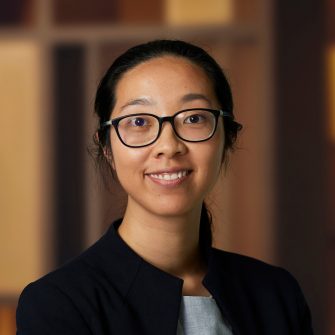
Mei Gong
Mei Gong
BSc LLB (Hons), 2018
Tell us about your life and career(s) after UNSW.
I am a senior associate in a mid-tier national firm, specialising in competition and consumer law. I also did a 5-year stint in an international law firm where I started as a summer clerk before progressing to a graduate and then solicitor role. I have relished the opportunities to act for clients in high-profile cartel proceedings, shared legal insights through co-authoring international conference papers and Australian legal journals and worked directly with partners to help clients successfully obtain merger clearance for billion-dollar deals.
True to the UNSW motto of Never Stand Still, my quest for learning and self-improvement has not stopped since I graduated. I continue to find opportunities to develop my skills and, most importantly, give back to the legal community in my mission to support junior lawyers in becoming their best selves and creating an inclusive space within the legal profession.
Aside from junior lawyers, I also have a particular interest in supporting female and foreign qualified lawyer cohorts within the legal profession and have sat on firm committees and volunteered in organisations that seek to advance related causes. In 2022, I started the first ever foreign-qualified lawyer publication in Australia called ‘To Aus, with Law’ as part of my involvement with the Asian Australian Lawyers Association. I have mentored extensively, including as a mentor for the UNSW Career Discovery Program, and shared verbal and written junior lawyering insights on popular legal publication channels such as Lawyers Weekly and through my LinkedIn. I was also a panellist at an international conference where I spoke about the importance of advocating for one’s own career progression. Partly due to these contributions, I was recognised in 2023 by Lawyers Weekly as the national winner for the 30 under 30 category for Competition, Trade and Regulation and by the NSW Law Society as the NSW Young Lawyer of the Year.
Outside of work, I have a passion for running and reading, and ran my first two half-marathons within the last 18 months.
Reflecting on your first year at uni - did you imagine yourself doing what you do today?
Definitely not! I was not sure whether I wanted to pursue law as a career in my first year of uni, having never studied any related subjects in high school and not knowing anyone in the legal profession. In my first year of uni, I participated in different competitions hosted by the UNSW Law Society, such as client negotiations and witness examinations, which I did quite terribly in. Case in point: I didn’t make it past the preliminary round of a witness examination competition (which was intended to be a warm-up round before the official rounds of the competition). As a first-year law student, I certainly lacked the self-belief that I could become a great lawyer one day, but decided nonetheless that I would give my legal studies a serious go and see where it takes me.Why did you choose your law degree?
A combination of a few different things. I had an argumentative side growing up, and my parents had suggested that law was perhaps a good career to explore (my parents also shared the Asian stereotype and perceived being a lawyer as a ‘prestigious’ career). I had a high ATAR (and with the assistance of a UNSW scholarship, which gave me a fraction of the mark that was needed for me to gain direct entry into UNSW Law), I knew that direct entry into this prestigious law school was a possibility. I also thought about the worst-case scenario, being that if I don’t end up practising law, the critical thinking and negotiation skills I developed in my legal studies will no doubt prove to be helpful in versatile ways for other career paths that I may end up pursuing in the future. All of the above factors, coupled with the fact that I loved the campus and had the opportunity to study science (something I loved) with law made it an unmissable opportunity.How did your time at UNSW help shape who you are today?
It has shaped who I am in immense and profound ways.UNSW’s emphasis on class participation in its courses (along with the small class format) challenged me to grapple with different (and at times, opposing) legal arguments and communicate my perspective in a coherent way within a safe environment (as I was particularly shy and introverted when I started my uni studies).
UNSW’s focus on supporting social justice causes has also had an immense impact on broadening my vision to support disadvantaged and vulnerable cohorts in different contexts in a practical way. During my time at UNSW, I volunteered extensively at my local library to deliver free seminars to support HSC students (for which my local council recognised me as ‘Young Citizen of the Year’). Additionally, I volunteered to support crime victims as a front desk assistant in community legal centres, brainstormed potential ways to increase equity of access to justice through a hackathon, and visited detention centres to assist asylum seekers and refugees as part of a social justice initiative.
All of these experiences have inspired me to be thorough in my legal reasoning, to share my passion for the law with others, and to always look for ways to lift my peers and community through my legal knowledge and experience.
What were your most memorable experiences while studying at UNSW? Any lecturers you want to shout out?
There were quite a few.In my third year of university, I had the opportunity to volunteer at Dubbo for a week. There, I developed a more nuanced, first-hand understanding of the complex relationships First Nations people had with the justice system and assisted some disadvantaged First Nations children. That was my first experience going to regional NSW (and it was a very humbling one).
Another was joining two mentoring programs offered by UNSW, one when I was a first-year law student and the other when I was a penultimate-year clerkship applicant. I have remained close to both of my mentors since then.
The third is having very passionate and varied lecturers who inspired my lifelong love for the law in different ways. My very first lecturer, Sam Hartridge, taught me the importance of ambiguity (and learning to navigate that within the law). Dr Katharine Kemp always provided great analogies and facilitated lively class discussions. My first taste of competition and consumer law was studying the elective with Professor Deborah Healey, following which my interest in the area deepened and I later found myself in a graduate rotation in this very area where I subsequently settled in. Professor Michael Handler is another shout-out as I really enjoyed the two intellectual property law courses I took with him in my last year of uni (and at one point had planned to become an intellectual property lawyer until I pivoted when circumstances made that an impractical option).
Why is studying law important?
As we live in a society governed by a myriad of laws and regulations, knowing how to interpret the law and how the legal systems work can make us more informed and empowered citizens. For those of us who want to engage in policy work or legal reform work, it is an invaluable tool.Through learning about how different judges can have dissenting opinions on the same case (and how cases can be appealed and overturned), it encourages us to consider alternative perspectives (to our own) and be willing to revise our conclusions should the facts, or our interpretation of the law, change (as they inevitably do from time to time). I think this is particularly valuable in the age of social media, where it is often far too easy to find more content to validate our views and perspectives and far harder to be exposed to opposing views, which is essential if we want to facilitate informed, balanced debates on important issues.
What are some common misconceptions about careers in law?
Two come to mind. One is that ‘lawyers are professional liars’. This was an actual quote of what a non-law classmate said to me during my university days when they first learnt that I was studying law. I was certainly taken aback in the moment. With the benefit of hindsight, while there is a perceived notion that lawyers are stealthy and may be dishonest in defending clients and winning cases, this ignores the reality that the overwhelming majority of lawyers abide by a very strong set of ethical duties.The other is that lawyers can practise in many different areas of law in private practice, and matters can be resolved in a day or two. This misconception may have stemmed from legal dramas such as Suits, where we see high-profile lawyers resolve contentious cases very quickly, and they seem to advise on a different area of the law with every case they manage. While this may be true for some small matters and for lawyers working in smaller law firms, generally, lawyers who work on large cases and/or in mid-tier to top-tier law firms tend to specialise in one or two practice areas and will not be resolving cases within a day. Litigation, in particular, can be a grind and can drag on for years, depending on the complexity of the issue and whether there are appeals to any judgment.
If you could change one thing in the legal profession tomorrow, what would it be?
I hope more employers value and champion the existing skills that foreign-qualified lawyers have gained through their legal experiences in other jurisdictions and provide them with more opportunities to try out different roles within the legal profession, as I strongly believe they can make a significant and valuable contribution to our community.What is one of the biggest challenges you face in your field of work?
Competition and consumer laws evolve very rapidly, and it is important to keep updated on Australian and international developments, which can be a challenge as lawyers (including myself) can be time-poor. Related to that, it is a challenge to rethink what you already know and be clear about what you don’t know and where to find the missing information as the law evolves. So it is practising confident humility where you harness your experience but need to remain open to learning, revising and updating your frame of reference in assessing legal problems.What advice would you give someone considering studying law at UNSW?
I would highly recommend it and I hope I have said enough above to convince you! If not, I would still recommend that you do your research, attend Open Days, talk to law students from different universities and see whether what UNSW can offer is the right fit for you. As with everything in life, university is really what you make of it, so if you do get the opportunity, be open to all possibilities and try out lots of things. Enjoy the journey, and don’t take yourself too seriously along the way!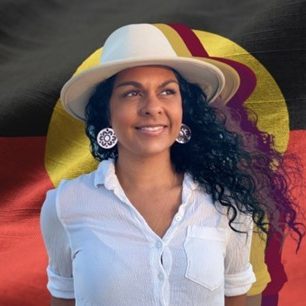
Teela Reid
Teela Reid
Juris Doctor, 2015
Teela Reid is a proud Wiradjuri and Wailwan woman, lawyer, activist and storyteller who says her path is eternally guided by the direction of her ancestors. This path has taken Teela on a trail-blazing journey towards advocating for Aboriginal land rights, dismantling systemic racism in Australia, and elevating the voices of First Nations people that is vitally important for all generations.
Teela initially started her career as a teacher, but after being selected as an Australian Youth Delegate to the United Nations (UN) was inspired to make a career change into law so that she could come back home and pursue advocacy for First Nations peoples.
Teela says she saw studying law as her chance to understand and challenge the system that has lawfully disempowered her people and weaponised racism. “I'm the first generation to have access to formal education. I saw studying law as a chance to better understand these systems and empower my people.”
Teela graduated with her Juris Doctor (JD) from UNSW Law & Justice in 2015. “The Juris Doctor is a challenging yet rewarding program that has the potential to change your career and life trajectory. It's such a huge life decision to embark on postgraduate studies, but one that will change your life and open up an expanse of career paths that would have not otherwise been available,” she says.
“I looked for a law school that had an ethos and a philosophy that aligned with my values. I chose to study at UNSW because it genuinely started from a good place at the leadership of Hal Wootten. They also had Indigenous academic support programs and a visible presence of Indigenous students at the law school."
Since graduating, Teela has been appointed Special Counsel - First Nations Justice at the Environmental Defenders Office and is the inaugural Lawyer in Residence at the University of Sydney Law School, where she maintains relationships with international law schools. Teela is also the co-founder of Rebellious Lawyers Australia, which supports the concept of ‘movement lawyering’ – a model through which Australian lawyers can better support movements that address social injustice and systemic change. She has worked as a senior solicitor in Aboriginal Land Rights litigation at Chalk & Behrendt, as a criminal and civil lawyer at Legal Aid NSW and is also the co-founder of Blackfulla Bookclub, a platform and community space that celebrates First Nations stories. Teela was also a working group leader on s 51(xxvi), the Race Power, in the Constitutional dialogue process that culminated in the Uluru Statement from the Heart, which was the catalyst for the historic Indigenous Voice Referendum in 2023. She has been widely recognised for her public advocacy work to end systemic racism, including being named the 2020 UNSW Young Alumni, 2021 Future Shaper by Time Out Sydney, 2022 Voice of Now by Marie Claire and gaining a spot on Marie Claire’s 2023 Power List.
Now that the referendum is over, Teela is determined to use her knowledge and passion to keep advocating for change in Australia to empower and shape First Nations knowledges.
“The question of Australia’s legitimacy remains as a consequence of the nation's failure to recognise Aboriginal and Torres Strait Islander people in the 2023 referendum – we are the only democracy that refuses to recognise its Indigenous peoples. Despite this, we know there is a groundswell of Australians prepared to seek truth and justice, so it is important we maintain the momentum and consolidate the goodwill of many who want to live in a more equal world - this requires reckoning with and respecting the rights of Indigenous peoples consistent with the United Nations Declaration on the Rights of Indigenous Peoples.
My whole upbringing has been defined by the notion of reconciliation. I don’t think this framework is tenable any longer in a nation that is yet to come to terms with the truth of its history, this is evidence by the rejection by Australians at the referendum,” she says.
“I am now focused on how we, as a nation, protect the unique rights and inherent wisdom of First Nations peoples who have cared for this country since time immemorial. All Australians have an obligation to understand the truth of our history and tread lightly on this country; without country, there is no people.”
This article originally appeared in the Koori Mail. Photo credit: Jakayla Reid.

Hiroko Ito
Hiroko Ito
JD 2014
Hiroko Ito received a Juris Doctor from UNSW in addition to her Masters of Laws in Tokyo. Hiroko was born in Japan. However, she has spent most of her life living and working abroad, including in Bangladesh, Russia, France and Australia. Through these contrasting cultural experiences and her hard work and dedication, she now speaks English, Japanese, Russian and French.
Prior to law, Hiroko trained as a professional ballerina at the Bolshoi Ballet in Moscow, where she was awarded the highest grades in all areas of examination, becoming a qualified ballet artist. Hiroko’s love of ballet continues. In her spare time, she dances at a ballet studio and teaches ballet to children on weekends.
After Hiroko’s ballet career, she embarked on a new career at the Ministry of Foreign Affairs of Japan, training as a diplomat in Tokyo and then working at the Embassy of Japan in Australia.
Hiroko currently works as an Australian-qualified solicitor at international law firm Herbert Smith Freehills (HSF), which she joined in 2015.
Hiroko is based in HSF’s Sydney office where she specialises in project and asset finance. She has extensive experience advising on major energy and infrastructure transactions covering a range of sectors, from renewable energy to mining. Hiroko is a key member of the 'HSF Australia-Japan corridor' practice and is a trusted adviser working closely with Japanese clients on their cross-border transactions. In 2017, Hiroko spent six months working in the HSF Tokyo office on secondment, and she regularly travels to Tokyo for client liaison. Hiroko is also a mental health champion and is a true believer in the importance of increasing mental health awareness in the workplace.
The most valuable thing UNSW Law gave me was confidence. UNSW provided me with a solid legal, intellectual and social foundation. Having excellent training and incredible support from lecturers, and the culturally diverse students, who are now my best friends, encouraged me to learn and succeed, and to turn to a career as a private practice lawyer. Studying law as an international law student was a difficult period for me as English is my third language, however support from the law school and my friends helped me to prosper and embrace Australian law and the Sydney lifestyle. I am proud of my achievements and choices and look forward to what challenges may come!

Jackson Yun Teng
Jackson Yun Teng
JD 2011
Jackson Y. Teng is a senior partner at the Shanghai Office of Zhonglun W&D Law Firm. He is admitted to practice law in both mainland China and the state of New South Wales in Australia. Mr. Teng is a senior lawyer in China-related corporate finance, M&A transactions, and market regulatory compliance matters. Meanwhile, he is also an experienced litigator in commercial dispute resolution and insolvency & restructuring cases.
Mr. Teng has advised many high-profile clients at home and abroad on legal matters, and in certain cases acted on their behalf in litigation or arbitration. His clients include Jaguar Land Rover, Mondelēz International (NASDAQ: MDLZ), Wework, Travelport (NYSE: TVPT), Wood Group (LON:WG), BlueScope Buildings, Orient International (Holding), Shanghai Lin Gang Group, Beijing Capital Group, Jiangsu Hi-tech Investment Group, Jiemian News, Shanghai Academy of Spaceflight Technology, Bocomm Leasing, CMB Financial Leasing, China Development Bank Leasing, AVIC International Leasing, CITIC Asset Management, Sino-Australian International Trust, and Fortune Venture Investment etc. He also frequently advises some celebrities in entertainment industry and owners of private enterprises.
Before joining Zhonglun W&D, Mr. Teng had worked in various domestic and international law firms in mainland China, mainly engaging in foreign direct investment, real estate, finance and other related areas. In 2020 & 2021, Mr. Teng was awarded as one of the A-list Lawyer by Chinese Business Law Journal and selected as the Top Lawyers in China by Jiemian News.
At present, Mr. Teng is also a guest lecturer at Law School of Shanghai University of International Business and Economics, Law School of Beijing Normal University (Zhuhai Campus), and Skema Business School (China Campus), arbitrator of Dalian Arbitration Commission, and a member of the Special Committee of the Shanghai Corporate Counsel Association, and a senior research fellow of the International Finance and Trade Research Centre.
My education at UNSW was a pathway to an exciting and rewarding career. During the JD program, I gained an in-depth understanding of not only common law but also its social implications. Besides the knowledge and skills that I gained from the program, the way of thinking is most invaluable which benefits my career and will continue to be my core competitiveness.

Jonathan Stambolis
Jonathan Stambolis
MILIR 2010
Jonathan Stambolis is the Chief Executive Officer of Zenysis, a Silicon Valley startup that helps governments harness the power of big data and AI to transform their delivery of healthcare and humanitarian aid.
After graduating from UNSW with a Masters of International Law and International Relations, Jonathan was posted to the Australian Mission to the United Nations in New York. Jonathan represented Australia in international negotiations on global health, development and humanitarian affairs.
Jonathan was a lead negotiator of the ground-breaking 2011 United Nations Political Declaration for HIV/AIDS, the international political framework for the global AIDS response. He also served as the Manager of Public Diplomacy for the Australian Mission during Australia’s successful campaign for a seat on the United Nations Security Council.
Before his career in international diplomacy, Jonathan was a lawyer at Allens Arthur Robison and Senior Associate at Clayton Utz in Sydney and director of the AIDS Council of New South Wales.
My education at UNSW was a passport to an exciting and rewarding career at the United Nations, where I had the opportunity to put what I had learned in the classroom to immediate use in international negotiations spanning a range of policy areas in which Australia is a powerful force for good in the world. The knowledge and skills I gained studying at UNSW have also been invaluable in helping me launch and grow a global health startup that now helps governments deliver healthcare to millions of people in Africa, Asia and Latin America. An education at UNSW is a passport to the world.
-

The Hon Michael Kirby AC CMG
The Hon Michael Kirby AC CMG
HonLLD 2008
When he retired from the High Court of Australia on 2 February 2009, Michael Kirby was Australia’s longest serving judge.
He was first appointed in 1975 as a Deputy President of the Australian Conciliation & Arbitration Commission. Soon after, he became inaugural Chairman of the Australian Law Reform Commission (1975 - 1984). Later, he was appointed a Judge of the Federal Court of Australia, then President of the New South Wales Court of Appeal (1984 - 1996) and, concurrently, President of the Court of Appeal of Solomon Islands (1995 - 1996). His appointment to the High Court of Australia followed in 1996 and he served thirteen years. In later years, he was Acting Chief Justice of Australia twice.
In addition to his judicial duties, Michael Kirby has served on three university governing bodies being elected Chancellor of Macquarie University in Sydney (1984 - 1993). He also served on many national and international bodies. Amongst the latter have been service as a member of the World Health Organisation’s Global Commission on AIDS (1988 - 1992); President of the International Commission of Jurists, Geneva (1995 - 1998); UN Special Representative for Human Rights in Cambodia (1993 - 1996); a member of the UNESCO International Bioethics Committee (1995 - 2005); a member of the High Commissioner for Human Rights’ Judicial Reference Group (2007 - 2009) and a member of the UNAIDS Reference Group on HIV and Human Rights (2004 - ).
Following his judicial retirement, Michael Kirby was elected President of the Institute of Arbitrators & Mediators Australia from 2009-2010. He served as a Board Member of the Australian Centre for International Commercial Arbitration (2009-2014). He has been appointed Honorary Visiting Professor by twelve universities.He participates regularly in many local and international conferences and meetings. He has been awarded a number of honorary doctorates at home and abroad. He also serves as Editor-in-Chief of The Laws of Australia in 2009.
He served 2011-2012 as a member of the Eminent Persons Group on the future of the Commonwealth of Nations. He was a Commissioner of the UNDP Global Commission of HIV and the Law in 2011-2012. He was appointed to the Advisory Council of Transparency International, based in Berlin in 2012. In 2013- 2014, he was appointed Chair of the UN Commission of Inquiry on Human Rights Violations in North Korea. He was a Commissioner of the UNAIDS Lancet Commission on AIDS to the Right to Health (2013-2014); the Global Fund’s Equitable Access Panel (2015-2016); the UN Secretary-General’s High Level Panel on Access to Essential Medicines (2015-2016); UNAIDS/OHCHR’s panel on overreach of criminal law (2017); and Co-Chair of the International Bar Association’s Human Rights Institute (2018 - ).
He was awarded the Gruber Justice Prize in 2010 and has been Patron of the Kirby Institute on Blood Borne Diseases in UNSW Sydney, since 2011. In May 2017, he was invested by Japan with the insignia of the Order of the Rising Sun, Gold and Silver Star in Tokyo, with an audience with the Emperor of Japan. In 2018 he was elected a Fellow of the Royal Society of New South Wales (Est. 1866). He was also named for the 2018 United Nations Honour by the United Nations Association of Australia.
From the very start, I have followed with admiration the outstanding achievements of UNSW Law. It set out to combine doctrinal rigour with an understanding of social realities and empirical research on how the law operates in practice, not just in the books. It has been a beacon of academic engagement with law reform. I honour the leadership that UNSW Law has given to justice and human rights, as essential attributes of an Australian life in the law. I am proud to have been made an alumnus of UNSW Law. It is a splendid success story and its achievements have only just begun.

Karl Chong
Karl Chong
BCom LLB 2005
Karl Chong is a finance geek turned entrepreneur. He is the Co-Founder of Cocoon, a second home for families in New York City. Cocoon seeks to guide parenthood and family life through holistic programming and super fun events, in an inviting and safe setting, alongside an expert-led community.
Before this, Karl founded Groupon Singapore and served as Chief Executive Officer. Under Karl’s leadership, Groupon Singapore grew to 160 staff within three years and became the highest ranked e-commerce site in Singapore, surpassing Amazon and eBay.
Karl carved a successful career in investment banking and private equity at Macquarie Bank, New York City. Before that, he worked as a financial analyst at Proctor & Gamble and trader at UBS Investment Bank in Australia. Karl graduated with a double degree in Commerce and Laws at the University of New South Wales and attended INSEAD for his Masters.
Karl resides in NYC and is a Board Member of the UNSW US Foundation.
What I’ve experienced from UNSW Law is its global presence. Before graduating, I was able to spend a few weeks on exchange in Beijing at the China University of Political Science – an eye opening and rewarding experience! After graduating, I joined the Investment Banking arm at Macquarie Bank, which sent me to New York. I was amazed by how many UNSW Law grads I could easily meet in the United States of America, with not only successful careers, but who shared the connection and camaraderie of being UNSW Law alumni. I then moved to Singapore to launch a company. In Asia, whether I was in Singapore or Hong Kong, I experienced a very tight and diverse UNSW Law community. UNSW Law has helped connect me to a global community of friends and business peers!

Nicholas Carney
Nicholas Carney
BCom LLB 2005
Nicholas Carney is a Partner at Herbert Smith Freehills (HSF).
Nicholas advises governments and the private sector on complex infrastructure projects. He has experience across transport, health, social housing, defence and smart cities.
He graduated from UNSW with a BComm/LLB in 2005. Before starting at HSF, he led a national campaign for a Human Rights Act.
Nicholas was a member of UNSW Council from 2004 - 2019. He sits on the Foundation Board of the State Library of NSW.
UNSW Law has had a huge and positive impact on my career. I learned, amongst other things, how to dissect complex problems and construct practical solutions. I use these skills every day as I advise my clients on major infrastructure projects.

Rachel Davis
Rachel Davis
BA LLB 2003
Rachel is the Vice-President and Co-Founder of Shift – a non-profit organisation and the leading centre of expertise on the United Nations Guiding Principles on Business and Human Rights. Shift’s mission is to transform how business gets done to ensure respect for people’s lives and dignity, and its team of experts work globally with business, government, investors and civil society stakeholders to put the UN Guiding Principles into practice. Rachel has led work at Shift for the last decade on standard-setting, human rights and sports, financial institutions, conflict and international law.
Rachel has been the Chair of FIFA’s independent Human Rights Advisory Board since it was established in 2017 and has advised the International Olympic Committee on human rights since 2018. Before co-founding Shift, Rachel was a senior legal advisor to the Special Representative of the UN Secretary-General on business and human rights, Harvard Professor John Ruggie (2006-2011). Rachel is a Senior Program Fellow with the Corporate Responsibility Initiative at Harvard Kennedy School and an author of the leading study on the costs of company-community conflict in the extractive sector. Rachel was an associate at the High Court of Australia and the UN International Criminal Tribunal for the former Yugoslavia. She is a graduate of Harvard University and the University of New South Wales.
When I graduated from UNSW Law, I never imagined that I would be putting my degree to use advising on the development of new UN standards and then co-founding a non-profit organisation (and hiring a global team of experts) to drive the implementation of those standards with multinational companies, governments, investors and civil society allies across the world. I feel that my Law School training set me up in the best possible way to think through the range of challenges - normative, political, legal and organisational - that I’ve encountered along my unexpected career path in the emerging field of business and human rights. That training also embedded an awareness in me of a shared responsibility to address severe inequalities, both at home here in Australia and abroad. Voice and privilege are not distributed fairly or evenly in our globalised world; as UNSW Law graduates, we have the ability to try to do something about that.
-

Matthew Reilly
Matthew Reilly
BA LLB 1998
Born in Sydney in 1974, Matthew Reilly wrote his first novel, Contest, at the age of 19 during his first year studying law at the UNSW. Matthew self-published that book and was discovered by a publisher. He wrote his second novel, Ice Station, during his final year at UNSW Law.
Matthew is now an international bestselling author of sixteen novels, including the Scarecrow series, the Seven Ancient Wonders series and numerous standalone novels, including The Great Zoo of China, The Tournament, The Secret Runners of New York and Hover Car Racer, with worldwide sales of over 8 million copies. He has optioned the film rights to many of his novels to various major Hollywood studios including Disney, Paramount, Sony and Fox.
He owns and drives a DeLorean car. He also has a life-sized Han Solo in carbonite hanging on the wall of his office.
Matthew currently resides in Los Angeles.
I went to UNSW Law straight out of high school. I was a young man. Put simply, it was at UNSW Law where I learned how to think. It helped me both with my creative thinking and with my everyday thinking. Creating a legal argument is very similar to creating a story, which is what I do for a living. Anyone who has spent a day at a magistrate’s court might think they are exactly the same thing. In fact, spending a few days in the Sydney Local Court was one of the best experience of my law degree. I hope you’re still doing that, by the way. My studies at UNSW Law literally structured my young mind, which provided a foundation for critical thinking that has served me throughout my life. Even if you never actually practise law, the study of law is a marvellous thing to do. It’s the ultimate all-purpose degree. It gives you a window through which you can view a wider world: a world of real estate disputes, contractual negotiation, taxation arguments, even international law disputes. Speaking for myself, working in Hollywood where I make deals all the time, I still use what I learned in Contract Law almost every day.
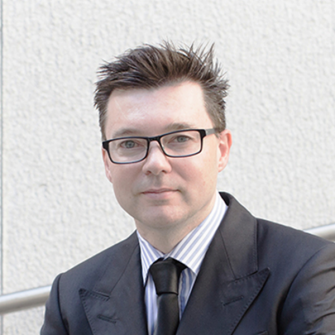
Judge Matthew Myers AM
Judge Matthew Myers AM
BA LLB 1997
His Honour Judge Myers AM sits as a Judge of the Federal Circuit Court of Australia in its Family Law Division.
Judge Myers was appointed as an ALRC Commissioner in February 2017 to lead the inquiry into the incarceration rates of Aboriginal and Torres Strait Islander peoples. Judge Myers was appointed to the Federal Circuit Court of Australia in 2011. He is an Adjunct Professor of Law at the University of New South Wales and holds a Bachelor of Arts and a Bachelor of Laws from the University of New South Wales, a Master of Applied Law (Family Law) from the College of Law and a Vocational Graduate Diploma of Family Dispute Resolution from Bond University.
Judge Myers is also an accredited and experienced Family Dispute Resolution practitioner and is active in a number of committees including the Federal Circuit Court Indigenous Access to Justice Committee, the Law Society of NSW Indigenous Issues Committee and Co-Chair of the Aboriginal Family Law Pathways network.
Judge Myers was awarded the NSW Law Society President’s medal in 2011 and received the award of Member of the Order of Australia in the Queen’s Birthday Honours list in 2013 for services to the community in the area of welfare and family law.
Judge Myers is a Fellow of the Australian Academy of Law.
I felt enormously supported by the UNSW Faculty of Law while undertaking my studies. The UNSW Faculty of Law has an exceptional track record for actively encouraging the graduation of Aboriginal and Torres Strait Islander people into the legal profession. I have remained closely involved with Faculty of Law and am grateful to the faculty and its academic staff who supported my elevation to the Bench and for the significant assistance they provided me during the period I was a Commissioner at the Australian Law Reform Commission.

Nicholas Gray
Nicholas Gray
BCom LLB 1997
Nicholas Gray is MD and Publisher of The Australian & Prestige and MD of Tech Platform Partnerships.
Over his decade at News Corp Australia Nicholas has: led NCA's relationships with Tech Platform Partnerships (Google, Meta, Apple, Amazon, TikTok, Microsoft, Open AI) since 2021; led NCA's 1 million strong subscriptions business. Between 2013 and 2020 Nicholas was at various stages CEO of The Australian, MD of Prestige Titles (Vogue, Vogue Living and GQ), MD of NSW and Director of Transformation for NCA. He first joined News Corp in 2012 following the acquisition of Alan Kohler's Business Spectator, of which he was GM and Publisher.
Before this, Nicholas was CFO & Strategy Director and then National Sales Director at during a four year stint at ninemsn (a former Nine | Microsoft joint venture). Prior to this, Nicholas was corporate strategy at Lion Nathan and was an investment banker at Citigroup in London and Tokyo and Macquarie Bank in Sydney.
Nicholas is non-executive director of Hipages, ThinkNewsBrands and the University of NSW Foundation. Nicholas has a Bachelor of Laws and a Bachelor of Accounting from the University of NSW.
My time at UNSW Law was one of the most important periods of personal and professional development in my life to date. After five engaging and enjoyable years there, I left with a unique and high-quality legal education, great friends and the confidence to tackle the challenges that lay ahead. I am forever grateful for the education and determined to pay it forward to the next generation.
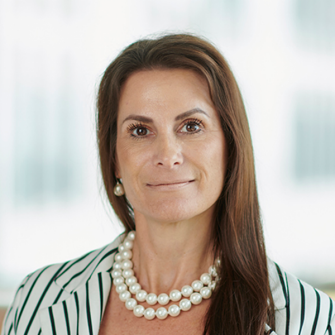
Nicole Green
Nicole Green
BCom LLB 1996
Nicole currently leads MinterEllison's Infrastructure Industry team nationally and is also a Partner in the Infrastructure, Construction & Property team at MinterEllison. She has also previously held the positions of:
- National Government Practice Leader
- Sydney Office Managing Partner
Nicole has over 23 years of experience in legal aspects of infrastructure, construction, engineering and project development. She focuses on high profile infrastructure developments (economic and social), and large scale commercial and residential developments, including urban renewal.
She has expertise working with public-private partnerships, infrastructure procurement and delivery, and major property development, providing strategic and commercial advice, focusing on risk management and stakeholder engagement.
Nicole has been involved in numerous significant infrastructure and development projects that have changed and enhanced our cities.
Nicole currently sits on the Board of Infrastructure Partnerships Australia Limited.
She obtained her BCom/LLB from the University of New South Wales and is Chair of the UNSW Law Advisory Council.
UNSW has a fantastic law school that is progressive and constantly evolving with the times. The tutorial style of teaching is to be commended – it allows for analysis, debate, deep thinking – and an opportunity to engage with great minds and develop relationships – something which those of us in the law are truly fortunate to have. Personally, UNSW law school taught me to think critically, and a degree from UNSW allowed me to enter the world (and business) of law. To have obtained a law degree from the University of New South Wales is a true privilege. And a privilege that I feel needs to be paid forward. Through my career in law I have not only been able to advise clients, but also to help others, in many meaningful ways – whether through pro-bono work, mentoring, not-for-profits or board roles.

Michael Rose AM
Michael Rose AM
LLB 1995
Michael is Chairman of the Committee for Sydney, an independent think tank that provides research, thought leadership and advocacy on economic, social, cultural and environmental issues relevant to Sydney. He is also Chairman of Greater Sydney Parklands, which is responsible for managing major urban parklands in Sydney. He also sits on the boards of the Westmead Institute for Medical Research and the Sydney Harbour Trust.
At UNSW, Michael chairs the Institute for Global Development and is a Senior Advisor in the Office of the President and Vice-Chancellor. He also sits as one of UNSW’s representatives on the board of the China Advanced Technology Industrial Research Institute.
In addition to chairing the Institute for Global Development, Michael’s experience in development includes eight years as Global Chairman of ChildFund Alliance, a development NGO with programs in more than 65 countries.
Michael has been actively engaged in policy issues involving indigenous communities and indigenous rights, employment and education. In 2016 he served as a member of the Referendum Council on Constitutional Recognition. In the same year, he was appointed a Member of the Order of Australia for services to Indigenous Communities and the Legal Profession.
Michael was a partner of Allens for more than 20 years, including eight years as Chief Executive Partner.
My time at UNSW Law set me up for a career that has been varied, meaningful, sustained and sustaining. Learning the law was just a part of this. What I really took away - and what has mattered most - was a way of thinking. Curiosity, critical thinking, an openness to change and a sense of wider responsibility and possibility. These were the fundamentals of my time at UNSW Law and they still play out in my career nearly four decades later.

Terri Janke
Terri Janke
BA LLB 1995
Terri Janke is an Indigenous woman with Wuthathi/Meriam heritage. She graduated from UNSW in 1995 with a BA LLB. She is the Solicitor Director of Terri Janke and Company, a unique Australian law firm specialising in Indigenous intellectual property and business law. Terri is an international authority on Indigenous Cultural Intellectual Property (ICIP) and has written the leading protocols and ICIP models in the film, arts, museum and archival sector. In 2019, Terri completed a PhD thesis at the Australian National University. Terri has received numerous awards including the 2011 NAIDOC person of the year and the 2019 NSW Women Lawyers Community Lawyer of the Year.
I am grateful for the experience of studying law at UNSW. The Indigenous Law Program is the best of its kind and has been successful in graduating many leading Indigenous lawyers. We were taught by leading law lecturers who encouraged us to think, discuss and apply the law in the quest for social justice. I took these skills into my career, blending the legal skills with my Indigenous experience. It helped me develop as an international authority of Indigenous cultural and intellectual property. This gave me the courage to set up my own firm. We have acted for Indigenous organisations, government and corporate clients. Over the past 20 years, the firm has grown, and I have been able to employ several Indigenous graduates from UNSW. It’s been empowering to use my legal career to affect social change.
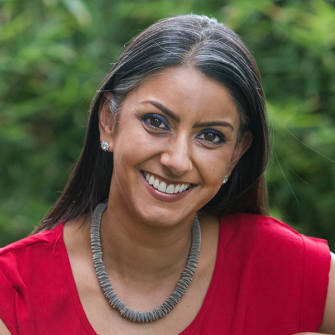
Shirley Chowdhary
Shirley Chowdhary
LLB 1994
Shirley has been the CEO of the GO Foundation since 2016. The GO Foundation was founded by Sydney Swans Legends, Adam Goodes and Michael O’Loughlin, and provides cultural and aspirational mentoring, financial assistance and access to opportunities for Indigenous students. At the heart of the GO Ecosystem is a burning desire to strengthen students’ cultural identity - to connect them in a meaningful way to their history, culture and heritage. In addition, by sharing students’ perspective and their culture with our Ecosystem partners, we hope to create workplaces that are truly inclusive and welcoming of all Australians.
After finishing her Law degree at UNSW, Shirley started her career at Cleary Gottlieb Steen & Hamilton after passing the New York Bar. She worked in Japan and across Asia for eight years, as an Associate at Cleary Gottlieb Steen & Hamilton and Regional Counsel for JP Morgan Investment Management.
After working on a number of community initiatives, including writing a biography for a World War 2 prisoner of war, Shirley returned to banking and finance joining the legal team at BT Financial Group and Westpac Banking Corporation. Before joining the GO Foundation, Shirley worked as a Counsel in the Treasury team at Westpac.
Until June 2020, Shirley was the Deputy Chair of the YMCA NSW and in 2019 was listed as one of the 100 Women of Influence by the Australian Financial Review.
Shirley is a strong advocate for a Reconciliation and the strength that Australians can all draw from Indigenous Australia and its heritage and culture, the oldest living culture in the world. She believes fiercely in the power of diversity and inclusion and is an advocate for increasing diversity amongst corporate and not-for-profit boards, and senior management.
I attended UNSW Law School and spent three years in the old law school on top of the Library building. As a grad class, we had such a great time. We came from every discipline and we were all trying to learn to be lawyers. Policeman, scientists, arts graduates, accountants – all together in the same class for three years. I don’t think we realised back then how innovative the teaching method was. Our classes were taught through interactive discussion and not through lecture. It made the learning so much more interesting and engaging. One of my clearest memories of law school is the day that the High Court handed down the Mabo decision. I remember students and staff in the hallways openly crying and celebrating. Even back then, UNSW Law School was working hard to create an equal and just Australia, and one where our First Nations people were recognised as the traditional custodians of this land. I am so proud of the work that UNSW Law School does to promote Reconciliation and love that I started my path as a lawyer there. I encourage more law students to consider a career in the third sector and to use their skill set to really make a difference.

Ingrid Gubbay
Ingrid Gubbay
BA LLB 1993
Ingrid Gubbay is a skilled litigator and campaign lawyer with 25 years of experience. She graduated from UNSW in 1993 with a BA LLB, and has since won awards for her ground-breaking cases, both in Australia where she ran test cases and class actions at the legal Aid Commission of NSW, and in the UK, where she formerly worked as Principal Campaign lawyer at the NGO Which?
As Head of the Human Rights and Environmental Disputes practice at Hausfeld & Co LLP, she conducts strategic public/private law litigation and advice, domestically and internationally, on behalf of communities and individuals impacted by the climate emergency and corporate environmental and human rights violations.
In April 2019, Ingrid was featured by The Law Society as ‘Lawyer of the Week’ for her work on the successful #PeriodPoverty legal campaign, fighting the Government to provide free sanitary products for all schools and colleges across the UK. She is also an integral member of the legal team that developed and filed the UN Communication in September 2019, on behalf of 16 youth petitioners to the UN Committee on the Rights of the Child, led by teenage activist Greta Thunberg, which attracted media coverage and recognition worldwide, given it is the first climate-related Petition filed to a UN Treaty Body. As a result, she is now working with activist groups and young people in exploring other potential claims before international Courts and Tribunals.
Deeply passionate about providing access to justice for those without deep pockets, much of her work is undertaken on a pro bono basis. She is an active member of the Global Climate Litigation network, a Trustee of Legal Action Network (LAW) that works to bring legal accountability for women living in conflict zones, and a frequent commentator on legal innovations in the fields of climate law and business and human rights.
I came to the law late as a mature age student and young single mother. I was a little bewildered by how smart the young graduates in my tutorials were but I had the edge on experience, and I was passionate from the start about using the law to make a difference. The progressive thinking and direction of the UNSW law community of teachers and many of its students, gave me so much more than the scholarship skills I needed to equip me to be an effective lawyer. They actively encouraged, at times pushed, guided me intellectually and exposed me to ideas and potential career options I had no idea existed before I began my course. I was given my first opportunity to speak at an international conference which was on refugee resettlement by one of the luminary members of staff, many of whom were already world experts in their fields. A number of my former teachers in the human rights field are now colleagues and friends.
My six years of studying at UNSW, are among the happiest and definitely life changing experiences of my life.
Stuart Fuller
Stuart Fuller
BCom LLB 1990
Lawyers underestimate their core skills - to read, absorb, synthesise and react, all in an articulate way, both in writing and speaking. These are core skills and fundamental capabilities for success in any career, and in life. UNSW Law School gave me these skills, but in a unique way of its teaching method, the human interaction and the broader focus on society. Law in context, which creates life connections for your career and with your colleagues and friends. Alumni have a role as advocates for the law school and also to contribute back to its future development. - Stuart Fuller
Stuart Fuller began his career after graduating with a Bachelor of Commerce and Laws from UNSW in 1990. He joined Mallesons Stephen Jaques as a solicitor and then became a partner in 1997. His leadership trajectory continued and in 2006, he was appointed Managing Partner of the firm.
In 2012, following the merger that created King & Wood Mallesons, Stuart became the inaugural Global Managing Partner of the newly formed international law firm. Based in Hong Kong, he led the integration of Chinese and Australian legal practices, pioneering a unique east-west legal model. He held this global leadership role until 2017.
In 2018, Stuart began the first of several terms on the UNSW Law Advisory Council, volunteering his time to help shape the strategic direction of the faculty. In the same year, Stuart began a new role at KPMG, as the Head of KPMG Law in Australia. Soon after, he was appointed Asia-Pacific Regional Leader for Legal Services. By August 2019, he became the Global Head of Legal Services for KPMG International, marking a significant milestone as the first Australian to hold this position. Over the next five years, he led a global legal network of more than 4,000 professionals across over 80 jurisdictions.
Stuart was recently named by the Financial Times as one of the Top 20 law firm leaders of the last 20 years who drove change in a period of globalisation, growth and technological disruption.
After retiring from legal practice at the end of 2024, Stuart has continued to contribute to the legal and business communities. He currently serves as Chair of Asia Society Australia and completed his final term on the UNSW Law Advisory Council in October 2025, of which he has been Chair since 2022.
Stuart has been an invaluable guiding presence on the Law Advisory Council. His deep experience, sharp insights and kindness have enriched our discussions and helped shape the strategic direction of the Faculty. We are especially grateful for his commitment to supporting our students as they prepare for their careers in law. - Andrew Lynch, Dean Law & Justice
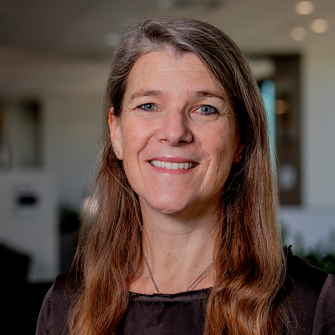
Juliette Bourke
Juliette Bourke
BA LLB 1988
Juliet has over 30 years' executive experience as a lawyer, entrepreneur and workplace consultant. For the first third of her career, Juliet worked as a lawyer in (Australian) State and Federal Governments (in criminal law, human rights law, discrimination law and employment law). For the second third, she co-founded and led a boutique workplace consulting firm, which she successfully sold into Deloitte. And for the final third, she was a partner in Deloitte, providing strategic workplace advice to global leaders and board members on a broad range of people issues including culture, leadership and the future of work, as well as diversity and inclusion. Her clients included the UN, BHP, Apple, Qantas, Gilead Sciences, Johnson & Johnson, APRA and the Reserve Bank of Australia.
Juliet now sits on a number of advisory boards including Julia Gillard’s Global Institute for Women’s Leadership at King’s College London, the AICD’s 30% Club Education Committee and UNSW Business School’s HR Board. She is currently completing her PhD at Brunel University London.
Juliet is a well-known speaker and writer. She has spoken at over 500 global conferences (including TEDx and APEC) and authored over 30 publications, including Which two heads are better than one? and articles in the Harvard Business Review, Australian Financial Review and Huffington Post. She has received numerous awards including the UNSW’s Alumni Award and the Women Lawyers’ Association’s Achievement Award, and in 2019 she was recognised by the AFR as one of Australia’s Top 100 Women of Influence.
In terms of pro-bono work, Juliet has chaired a number of not-for-profits including the Taskforce on Care Costs and the EEO Network of Australasia. She is currently the Chair of Save Centennial Glen group. Juliet is also an Adjunct Professor in the School of Management, UNSW Business School, UNSW Sydney. Juliet holds a BA, LLB and LLM (Hons).
I have no doubt that my time at UNSW Law School set me up for success in terms of laying strong foundations for my career opportunities, publications and public speaking experiences. I owe a deep debt of gratitude to the wonderful lecturers (people like David Brown and Jill Hunter) who provided much needed guidance to a young student who had lots of passion but an abundance of knowledge gaps. Not only did my wonderful lecturers fill those gaps, but they taught me to think critically and logically, and to appreciate the importance of using the right word, in the right place, at the right time. Perhaps even more importantly, the values of UNSW Law School gave me confidence to follow a career road less travelled – a road that has always aligned to my strong sense of social justice. I loved my time at Law School, not only for its gifts of knowledge and encouragement, but for the wonderful set of friends I developed who have stayed with me for a lifetime.
-

Suwanee Dharmalingam
Suwanee Dharmalingam
BCom LLB 1987
Board Memberships
Non-executive director of The Diplomacy Training Program (DTP) and member of the Finance, Audit and Fundraising Committee:
DTP is an independent Australian NGO committed to advancing human rights and empowering civil society in the Asia Pacific region through quality education and training, and the building of skills and capacity in non-governmental organisations and for individual human rights defenders and community advocates. The DTP was founded in 1989 by HE José Ramos-Horta, 1996 Nobel Peace Laureate and former President of Timor-Leste with Emeritus Professor Garth Nettheim (ex-Dean of UNSW Law & Justice). Since January 1990, the DTP has provided practical human rights training to over 3000 human rights defenders and community advocates in the Asia-Pacific and MENA (Middle Eastern and North Africa) region.
Non-executive director for Centre for Eye Research Australia (CERA), CERA Foundation and Finance, Risk and Audit Committee Member:
CERA is an international leader in eye research and uses world-class knowledge and expertise to achieve better treatments and faster eye disease diagnosis. It is deeply committed to conducting eye research with real-life impact and finding ways to prevent people from going blind. Its goal is to prevent avoidable vision loss within the Sustainable Development Goals and ultimately find cures to restore sight.
Work
Blake Dawson Waldron (Sydney) Solicitor in Corporate Commercial Division 1987 – 1989
NSW Attorney General’s Department Law Reform Commission as a Legal Officer 1990 – 1993 (Torrens Title Compensation for Loss reform and Personal Property Securities Reform joint Project with the Australian Law Reform Commission)
Australian Securities and Investments Commission: Office of the Chairman 1994 – 1996 (over-the-counter-markets and securities market reforms and regulation, International Organisation for Securities Commissions (IOSCO) - Working Party for international coordination of the reform of futures and securities markets
ANZ McCaughan/ANZ Securities 1996 – 1998 Compliance Manager establishing controls for the dealing room, commencement of investment advisory business
Macquarie Group Limited (licensed under Macquarie Equities Limited) Macquarie Bank Limited (licensed under Macquarie Private Bank) 1998 to date (22 years). Associate Director at Macquarie working part-time. Managing investments for professionals including medical and legal, families, small businesses, ex-pats, executives, SMSFs and retirees, and non-profits.
Community work and projects (existing)
Berry St Foundation You Matter - advocacy, advice and fundraising
East-West Foundation of Australia fundraising strategy and profiling
Murdoch Children’s Research - In addition to supporting with funding, I am also part of Macquarie Group’s 50th Anniversary Award Ambassadorship program supporting MCRI following Macquarie’s $A10 million grant given to the World Scabies Program
St Vincents Hospital East Melbourne Chairman’s business network, profiling, fundraising
I enjoyed the democratic and energised environment at UNSW law school driven by passionate colleagues, excellent academic staff, supportive administrators and the leadership of Professor Garth Nettheim. Paul Redmond and David Brown were influential in developing my understanding of business and human rights which has greatly influenced my Private Banking business model through early incorporation of the learnings of cultural, environmental and social governance and community work. UNSW law school had during my time, incredibly bright, pioneering and thought provoking lecturers, and the knowledge and techniques imparted to me by those talented academics have deeply influenced my approach to business and enabled my critical thinking and ability to integrate different viewpoints in whatever situations present.

Anne Collins
Anne Collins
BA 1984 LLB 1986
Anne Collins has been practising as a lawyer for more than 30 years and has broad experience across the various arms of the profession including private practice, at the Bar and now in-house.
Before starting in the role of KPMG International General Counsel in January 2016, Anne was the General Counsel to KPMG in Australia for six years. She gained experience dealing with a range of professional services firms in private practice and understands the many diverse and challenging legal issues that arise for global organisations at local and international levels.
Anne is known as a champion of diversity, and for building and sustaining teams of commercially astute and capable lawyers, focused on delivering business outcomes.
Professional and Industry Experience:
- KPMG International General Counsel
- Previously General Counsel to KPMG in Australia, including a member of the National Executive Committee and its Diversity Leadership Board
- Previously Partner at Blake Dawson (now Ashurst), including Leader of the Litigation Team in Sydney and Staff Partner
KPMG International Roles:
- General Counsel, KPMG International including leading the International Office of General Counsel
- Member of the Global Management Team
- Attendee at meetings of the Global Council, Global Board, Governance Committee, Quality, Risk Management & Reputation Committee and Audit and Finance Committee
- Chair, General Counsel Steering Group
When I started studying at UNSW, I knew very little about the law. I did not know any lawyers and had never had a need to engage with the legal system. So UNSW shaped my thinking about both the law and its operation in the Australian community and internationally. The breadth and utility of that early learning have never left me. I am very grateful for the rigour of the academic program, the focus on the importance of the law to social issues and developments in business, and the practical training in the application of the law. I was privileged to spend a semester working at the Kingsford Legal Centre where I learnt much about engaging with clients and how to provide relevant and pragmatic legal advice. All these skills have been critical in my work across the various arms of the profession and, even though I may not always have known the right legal answer, my education as a lawyer at UNSW meant I always knew how to find it. Equally importantly, I have many fond memories of my university days, and many of those in my year at UNSW are still friends and colleagues. There has always been an immediate bond and expectation when I have found myself engaging professionally with fellow alumni. I have watched the Law School at UNSW grow in strength and stature with pride, and there is no doubt it was a privilege to have studied at such a great institution.

Katrina Rathie
Katrina Rathie
BCom LLB 1985
Katrina Rathie is Partner in Charge at King & Wood Mallesons (KWM) in Sydney, which has been named Best Law Firm in Australia for the fourth year in a row by the AFR. Katrina is a member of the firm’s senior leadership team and is responsible for leading KWM’s Sydney office.
Katrina was recently named the Winner of the Board & Management category in the AFR 100 Women of Influence 2019.
Katrina is a member of Chief Executive Women.
Katrina holds a Bachelor of Commerce (Accounting & Financial Management)/Laws degree from UNSW Sydney (1985). She is a member of the Law Advisory Board of UNSW Sydney and is an Alumni Leader of UNSW Sydney Business School. She is admitted to practice in the NSW Supreme Court, the High Court of Australia and is an Attorney & Counsellor of the Supreme Court of New York.
She was celebrated in UNSW’s inaugural Creating Equality photographic exhibition and gave a keynote address at the UNSW Law Dean’s List ceremony in May 2019. Katrina has maintained strong links with UNSW Law and is proud that her son Jack recently graduated with a Bachelor of Commerce/Law (Honours) from UNSW Law in May 2019.
Katrina was named Woman Lawyer of the Year, Private Practice by the Women Lawyers Association of NSW and Intellectual Property Partner of the Year at the Lawyers Weekly Partner of the Year Awards 2018. She has a pre-eminent reputation in the intellectual property, advertising, marketing, brands, media and consumer law areas.
As the first appointed Mallesons Stephen Jaques Australian Partner with a Chinese cultural background 25 years ago, Katrina is passionate about cultural and intersectional diversity, inclusion and belonging. She is a member of the Diversity & Inclusion Committee of the Law Society of NSW, a member of the Managing Partners Diversity & Inclusion Forum and serves on the Advisory Board of Media Diversity Australia. She is a supporter and member of the Australian Asian Lawyers Association and the Women Lawyers Association.
Katrina is an independent non-executive director on charitable boards including Starlight Children’s Foundation of Australia and Osteoporosis Australia. She is a strong believer in the transformational power of education and as the mother of three boys, she serves as Councillor and Director of Cranbrook School and is Chair of Cranbrook Foundation.
UNSW Law is a world class law school. Two years after I graduated, I passed the New York Bar. I have had a successful and rewarding career at King & Wood Mallesons where I am privileged to lead the Sydney office. UNSW Law taught me critical analytic thinking skills, how to navigate the complexities of the law, how to win cases and how to give back by using my skills to help underprivileged members in our community. I met the most amazing cohort of women at UNSW Law – Shemara Wikramanayake (CEO, Macquarie), Elizabeth Broderick (United Nations (UN) women/male Champions of Change) and NEDs - Nicola Wakefield-Evans, Cheryl Bart and Maxine Brenner. We have each had an impact in law, business and increasingly on the global stage. The common factor is that we attended UNSW Law, there is undoubtedly something very special going on here. I was the first member of my family to study law. I was thrilled when my eldest son recently graduated with a Commerce/Law (Honours) degree from UNSW Law – a great mother/son double act! We both loved our time at UNSW Law – he represented UNSW at the United Nations and was part of the UNSW team that won the ICC mediation competition in Paris. He went on exchange to California and Tsinghua University, Beijing. As an alumni and parent, I can’t recommend UNSW highly enough.

Shemara Wikramanayake
Shemara Wikramanayake
BCom LLB 1985
Shemara has been Macquarie Group’s Managing Director and CEO since late 2018.
Macquarie is a global financial group providing clients with asset management, banking, leasing, advisory and risk, and capital solutions. Headquartered and listed in Australia, Macquarie operates in 31 markets and has over $560 billion in assets under management.
Shemara joined Macquarie in 1987 at Macquarie Capital in Sydney. During her time at Macquarie, Shemara has worked in six countries and across several business lines, establishing and leading Macquarie’s corporate advisory offices in New Zealand, Hong Kong and Malaysia, and the infrastructure funds management business in the US and Canada. Shemara has also served as Chair of the Macquarie Group Foundation.
As Head of Macquarie Asset Management for 10 years before her appointment as CEO, Shemara led a team of 1600 staff across 24 markets. Macquarie Asset Management grew to become a world-leading manager of infrastructure and real assets and a top 50 global public securities manager.
In 2018, Shemara was appointed a Commissioner of the Global Commission on Adaptation, a World Bank-led initiative that seeks to accelerate climate adaptation action and create concrete solutions which enhance resilience. In 2019, Shemara was appointed by the United Nation’s Special Envoy for Climate Action, Michael Bloomberg, to the Climate Finance Leadership Initiative, which seeks a six-fold increase in climate mitigation investment from the private sector.
Before joining Macquarie, Shemara worked as a corporate lawyer at Blake Dawson Waldron in Sydney. She holds a Bachelor of Commerce and Bachelor of Laws degrees from UNSW and completed the Advanced Management Program at Harvard Business School in 1996.
My time at UNSW has contributed in many ways to my career. My technical financial and legal skills have been valuable in assessing and executing opportunities in many important moments. Equally importantly, the Socratic learning approach at UNSW Law School helped me develop independent critical thinking from the beginning, including understanding the perspectives and reasoning of others and being able to challenge views where appropriate.
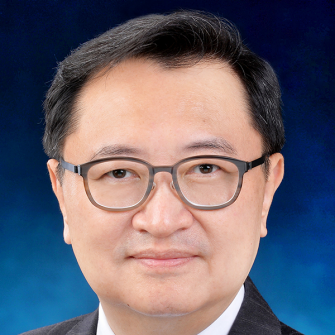
The Hon Justice Barnabas Fung
The Hon Justice Barnabas F
BCom 84 LLB 85
The Hon Mr Justice Barnabas Fung was born in Hong Kong in 1960. He obtained a BCom and LLB from UNSW in 1984 and 1985 respectively. He further received a PCLL from the University of Hong Kong in 1986. He was called to the Bars in NSW and Hong Kong in 1985 and 1986, respectively. He became an Associate of Australian Society of Certified Practising Accountants in 1986 and its fellow in 2004. He also became an Associate of the Chartered Institute of Arbitrators in the United Kingdom in 1990. He was in private practice between 1987 and 1993, and a part-time lecturer at the University of Hong Kong from 1991 to 1993. He was appointed a Magistrate in 1993, District Judge in 1998 and Chief District Judge in 2001. He was appointed as Judges of the Court of First Instance of the High Court in 2006 and Chairman of the Electoral Affairs Commission in 2009. He has been an accredited mediator since 2009 and Council member of the Hong Kong Mediation Accreditation Association Ltd since 2013.
My experience at UNSW Law has been one of learning through discussions. It enhances cross fertilization of ideas as well as training in advocacy and quick responses. My other experience at UNSW Business has also prepared me for various administrative duties including electoral work, mediation and previously in court administration as Chief District Judge, as well as in charitable work as sometimes Chairman and director of the Hong Kong Children’s Choir.

Nicola Wakefield Evans
Nicola Wakefield Evans
BJuris LLB 1984
Nicola is a qualified lawyer and independent non-executive director. She graduated from UNSW in 1984 with a BJuris/LLB. Nicola is a mergers & acquisitions (M&A) and equity capital markets lawyer and spent nearly 30 years at King & Wood Mallesons (20 years as a partner). Nicola was involved in a number of significant and ground-breaking M&A and capital markets transactions (including the acquisition of Bond Brewing by Lion Nathan, the demerger of OneSteel & Bluescope Steel from BHP and the sale of 11 Australian airports by the Federal Airports Corporation) and advised some of the largest companies in Australia, Asia and globally.
Nicola had several executive management roles at King & Wood Mallesons including Partner in Charge (Sydney), Managing Partner, Practice (Australia) and Managing Partner, International (Hong Kong) and has lived and worked in Sydney, Perth, Melbourne, New York and Hong Kong.
After a 30-year legal career at King & Wood Mallesons, Nicola became a non-executive director and is now on the boards of the Lendlease Group, Macquarie Group, the Clean Energy Finance Corporation, MetLife Australia, the Australian Institute of Company Directors, the University of New South Wales Foundation and Chief Executive Women. She is also a member of the Takeovers Panel. Nicola was also a non-executive director of Toll Holdings Limited from 2011 to 2017, Bupa Australia & New Zealand from 2013 to 2018, Asialink and Asialink Business (University of Melbourne) from 2011 to 2018 and the Advisory Council of UNSW Law from 2012 to 2017.
Nicola has extensive experience in Asia where she advised a number of Asian and Australian companies in her legal career, as a result of living in Hong Kong from 2007 – 2011.
Nicola has had a long history advocating for diversity both in the legal profession and in industry more broadly. She was involved in the successful promotion of women at King & Wood Mallesons by showing proactive leadership in managing issues involving female professionals, supporting and mentoring other professional women (both internally and externally) and being at the forefront of developing and implementing key initiatives to support diversity in the legal profession. She is currently the Chair of the 30% Club Australia, a global group advocating for a minimum of 30% of female directors on ASX300 companies. Nicola is also a board member of Chief Executive Women to help educate and influence all levels of Australian business and government on the importance of gender balance and diversity. In March 2019, Nicola was invited by the Australian Government to be a member of the Australian delegation to the United Nations, Commission for the Status of Women in New York.
Nicola was selected in 2009 as a member of Advance Asia 50 – a group of the most influential Australians living & working in Asia and was selected in 2011 as a member of Advance Global 50 – a group of leading Australian women working outside Australia. The Australian Financial Review named Nicola in 2013 as one of the inaugural 100 Women of Influence.
Nicola is married with 4 boys. She is a competitive sailor having sailed since childhood and now races a yacht with her husband and children.
I decided to attend UNSW in 1979 as I was inspired by the fresh thinking and modern teaching methods at the then relatively new law school at UNSW. My father is a lawyer and briefly taught at UNSW Law in the 1970s and was very impressed with the teaching staff, the range of subjects taught and persuaded me to attend UNSW. I loved my university days and was lucky to have had an amazing cohort of fellow students like Shemara Wikramanyke, Elizabeth Broderick, Cheryl Bart, Katrina Rathie, Maxine Brenner, Victoria Weekes, Fiona Shand and Irris Makler. During my time at King & Wood Mallesons, I was part of the recruitment team and spent a lot of time talking to students about a career in a large law firm. In 2011, I was asked by the Chancellor, David Gonski AC to join the Advisory Council of UNSW Law. This gave me an opportunity to be part of the curriculum refresh, the introduction of the Law Admission Test (LAT) and the establishment of a number of ground-breaking centres like the Andrew & Renata Kaldor Centre for International Refugee Law in 2013. I am enormously proud to be a graduate of UNSW Law and to have watched its growth over the last 40 years to become the pre-eminent law school that it is today.

Richard Alcock AO
Richard Alcock AO
BCom LLB 1981
In 2007, Richard joined Merrill Lynch after a 19-year career as an M&A and Competition Law Partner at Allens. For a decade, Richard led the Transport, Infrastructure, Power & Utilities team as Managing Director at Merrill Lynch. Since 2018 Richard has been Vice Chairman, Global Banking & Markets across the Investment Banking, Corporate Banking, Capital Markets, Global Markets and Global Treasury Services divisions.
Since 2011, Richard has also held leadership positions in NSW Health, until 2016 as Deputy Chairman, Sydney Children's Hospitals Network (Randwick and Westmead) and since 2017 as Chairman, Western Sydney Local Health District. The District is responsible for public health services for one million people in Western Sydney.
Since 2004, Richard has been a board member of Art Exhibitions Australia, a not for profit company limited by guarantee that arranges international art exhibitions to tour Australia in partnership with State Galleries and Museums. In 2017 on the award of the Queen’s Birthday Honours Richard was appointed an Officer in the Order of Australia for his contribution to governance, the management of health institutions and law.
UNSW Law equipped me with the skills, confidence and sense of responsibility to contribute broadly to society in law, business, health and wellness of Australians. My five years at UNSW were the most formative years of learning in my life for which I shall always be grateful.
-

Michele Blum
Michele Blum
BJuris 1975 LLB 1977
Michele holds Bachelor of Law and Bachelor of Jurisprudence degrees from UNSW.
Currently, Michele is the Director of Barton Phillip, a leading executive search firm specialising in global search and recruitment with a focus on placing partners in law firms. Her in-depth exposure in the legal area translates into an exceptional appreciation of legal client needs regarding talent search with an outstanding ability to identify leading practitioners in the sector. Whilst working for one of the top global executive search firms, Heidrick & Struggles, she also placed candidates at the C-level within top corporations as well as non-executive directors on the Boards of ASX- listed companies.
Before her consulting career, Michele practised as a lawyer for 15 years with a couple of law firms, including Gilbert + Tobin. She also spent seven years at the NSW Legal Aid Commission working in both the civil and criminal legal divisions.
Post her career as a lawyer she held several senior management and marketing roles within the public and private sectors. She was involved in the establishment of the Corporate Prosecutions Branch of the Commonwealth DPP and worked for some years as the Manager of the control of Radio and Televisions licences for the Australian Broadcasting Tribunal.
My memories of our classes in the huts and on the lawns of the lower campus will remain with me forever. The tuition was unique and quite advanced for those times – not experienced by other faculties at UNSW. It felt like we were a privileged group. The friends and colleagues I made during this period have been long-lasting and it has been wonderful to see so many of us achieve success.
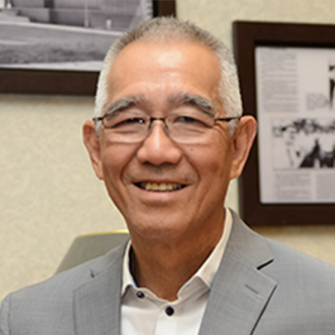
Justice David Wong
Justice David Wong
BCom 1976 LLB 1977
The Right Honourable Chief Judge of Sabah and Sarawak – Justice David Dak Wah Wong
David received his primary education in the North Borneo/ Sabah till 1965. In 1966, at the age of 11, he came to Australia to do his secondary education in St John’s College, Woodlawn, Lismore, NSW till 1971. Then in 1972, he read law at UNSW and also obtained a BCom, majoring in accountancy. From 1978 to 1979, he worked at a public accounting firm in Sydney as a qualified auditor. In 1979 he was admitted as a barrister of the New South Wales Supreme Court. In 1980, he was admitted to the Sabah Bar and he practised as an advocate and solicitor in Sabah until 1992. David then practised as a solicitor in Sydney until 1996 before returning to Sabah in 1997. There, he practised as an advocate and solicitor until 2005.
David was appointed a Judicial Commissioner of the High Court of Sabah and Sarawak in Kuching on 29 August 2005 and elevated as a Judge of the High Court of Sabah and Sarawak with effect from 11 April 2007. On 15 January 2009, he was transferred to the High Court of Kota Kinabalu, Sabah until his elevation to the Court of Appeal Malaysia on 8 January 2013. On 27 April 2018, he was elevated to the Federal Court (apex court of Malaysia) and on 11 July 2018, he was appointed as the Chief Judge of Sabah and Sarawak and still holds that office.
As the Chief Judge, David continues to ensure that “access to justice” is available to the indigenous peoples in Sabah and Sarawak through what is known as the “Mobile Court” project. The judiciary of the Borneo states have three mobile Court buses where the interior of the bus is converted into a Court and they are used to travel into areas that are not easily accessible by public transport. Under this program, the Judges and legal officers travel into the interiors to spend time with the indigenous people to learn more about their custom and culture. Inquiries are also conducted to ensure that indigenous people obtain a valid birth certificate to enable them to enjoy the same rights and privileges as their urban brothers and sisters.
David still commutes between Kuala Lumpur and Sydney and attended the 40th anniversary celebration of the UNSW Law school in 2018. He is an avid sports fan and continues to follow his favourite football team – St George and the NSW team during the interstate weeks.
I have no doubt that my legal foundation derived from UNSW Law and its lecturers played and continues to play a substantial and crucial part in my career. At UNSW Law, we were always challenged as to how the law could or should be to meet the end of justice. I find that approach very helpful in my judicial career.


